The IPO Is the Exit. You're the Liquidity.
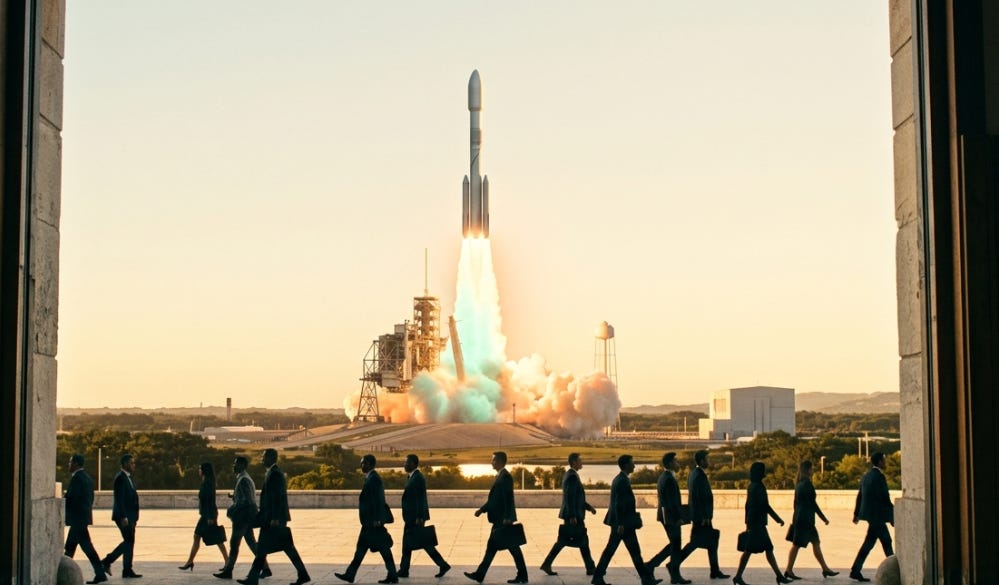
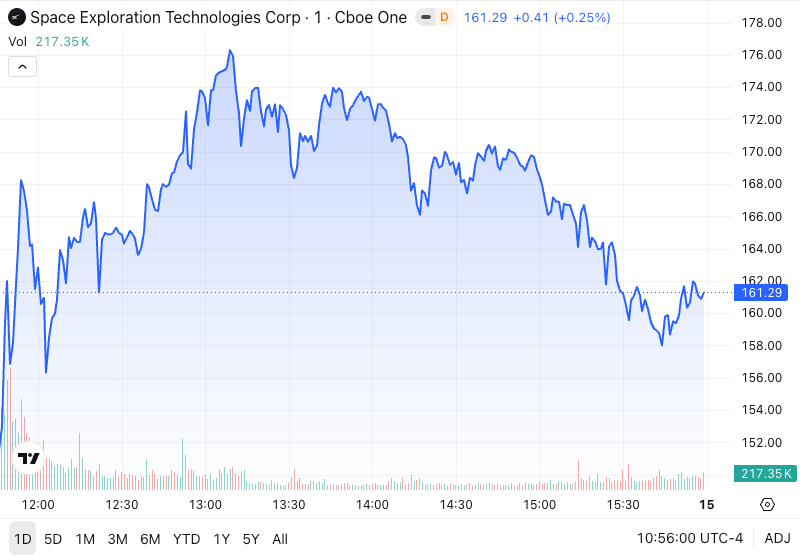
It took less than three hours for the biggest IPO in history to teach its first lesson. SpaceX rocketed to $177 out of the gate Friday, roughly 30% above its $135 offer price, then slid steadily into the low $160s.
The people who bought the excitement lost money before lunch.
But retail buyers were not the story of Friday…it was the employees of SpaceX.
An estimated 4,000 employees became millionaires at the opening bell, including welders and cafeteria cooks who took stock instead of bigger paychecks a decade ago. Roughly 400 of them are now worth $100 million or more.
I want to sit with that for a second, because it contains the entire lesson of this article. Those employees just finished a trade they entered ten years ago at private prices. Anyone who bought the open on Friday started a trade at the exact moment thousands of informed insiders finally got permission to sell.
Warren Buffett has thought about this asymmetry longer than most of us have been investing. His conclusion:
“It’s almost a mathematical impossibility to imagine that, out of the thousands of things for sale on a given day, the most attractively priced is the one being sold by a knowledgeable seller to a less-knowledgeable buyer.”
Asked in 2019 whether he’d buy the Uber IPO, he noted that in 54 years he didn’t think Berkshire had ever bought a new issue. At Berkshire meetings he’s put it more bluntly: the sellers pick the timing, so a new issue isn’t worth five seconds of your attention.
Strong words. Let’s test them against the evidence.
The structure of the trade
Let’s think about what an initial public offering actually is for a moment.
A group of insiders who know the business better than anyone alive chooses the precise moment to sell you a piece of it.
They hire 21 banks to market it.
They time it for maximum enthusiasm.
Then the shares open for trading at whatever price the most excited buyer in America will pay that morning.
Ben Graham flagged this in The Intelligent Investor decades ago: new issues come to market under conditions favorable to the seller, which by definition makes them less favorable for the buyer. His student just said it with more color.
The modern data backs them both.
Edward Jones and FactSet studied the 30 largest IPOs of the past 20 years and found that, measured from the first traded price rather than the offer price, the average return was negative 1.4%, with the group lagging the S&P 500 through its first year.
Jay Ritter’s research at the University of Florida shows unprofitable IPOs pop 26.5% on day one and then return negative 0.5% over the next three years, trailing the market by more than 30 percentage points.
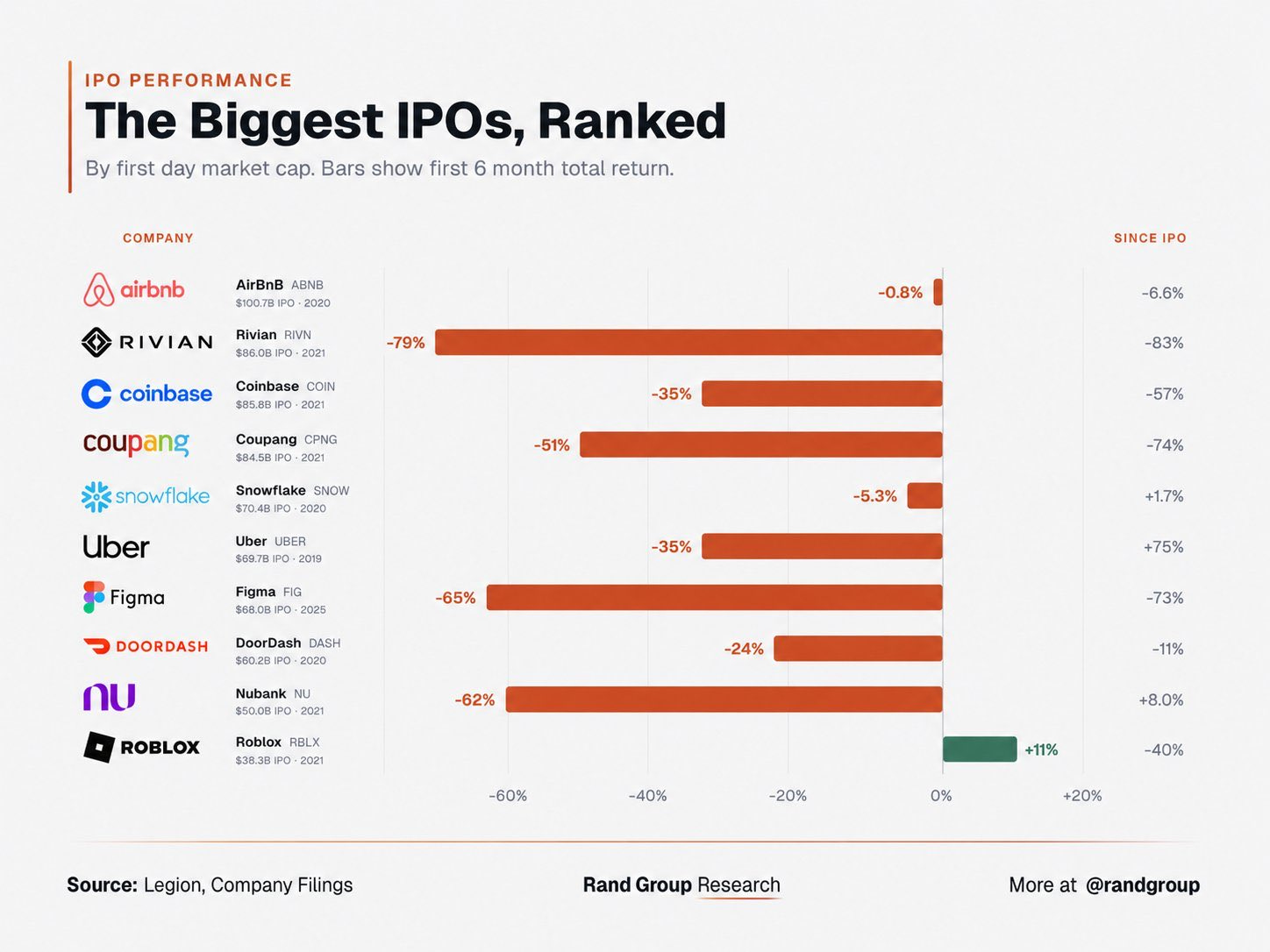
The pop is real.
It just isn’t for you.
It goes to the institutions who received allocations at the offer price, a price you were never going to get.
Two receipts from the past year
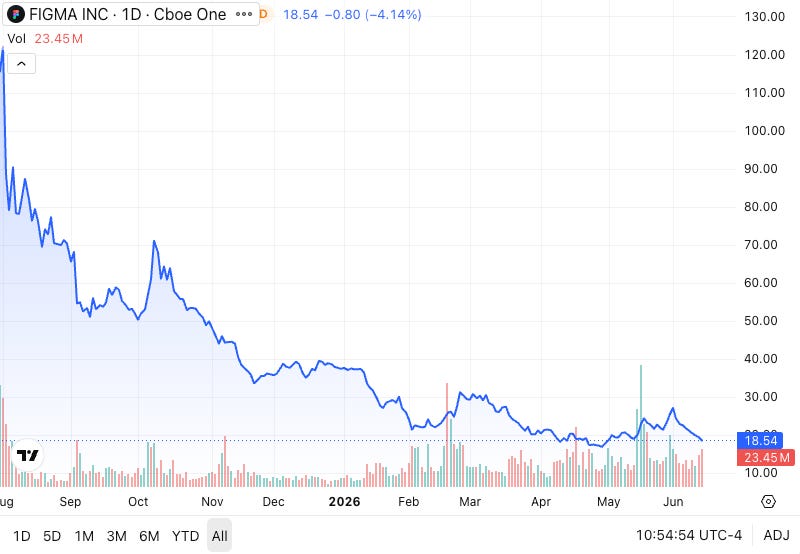
Figma priced its July 2025 IPO at $33 and closed its first day at $115.50, a 250% gain celebrated everywhere as proof the IPO market was back. Retail investors buying that open paid $85 or more. The deliberately low pricing triggered a performance clause that released insider shares after just 36 days instead of 180. Today the stock trades near $21, down more than 80% from its peak and below the original offer price. The business itself is fine, with revenue up 41% last year.
The entry price was the problem.
BitGo, the digital asset custodian, priced at $18 in January, popped about 25% on debut, and fell below its offer price by the second trading session. It now sits more than 40% below where it priced, to the point where analysts have shifted from growth stories to takeover speculation.
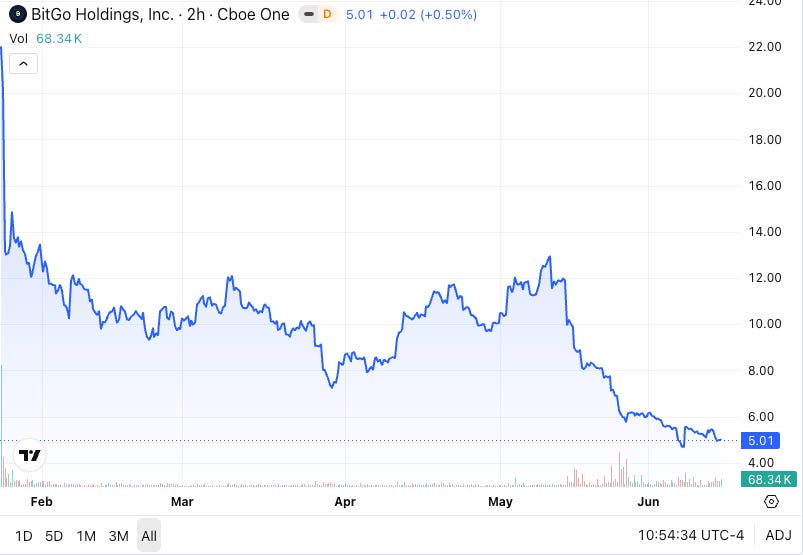
Two real companies.
Two functioning businesses.
Two groups of early investors who exited beautifully, and
Two groups of open-market buyers who funded the exit.
The pipeline deserves the same lens
The next twelve months bring Anthropic and OpenAI, both confidentially filed, plus expected listings from Kraken and Securitize. These are serious companies, and nothing here predicts they fail.
The Buffett model doesn’t say new public companies are bad businesses, but rather that the moment of listing is structurally the worst-informed, most-hyped, seller-optimized moment to buy them.
Consider what these filings represent. Anthropic’s last private round valued it at $965 billion. OpenAI’s at $852 billion. The venture funds, sovereign wealth funds, and employees who own those shares have watched their stakes appreciate at rates Forge Global measures at 65.7% annually for recent unicorns during their private years. The IPO is how that decade of private gains becomes spendable money. The word “offering” describes their side of the transaction, not yours.
Even Buffett’s lone modern exception proves the point. When Berkshire bought into Snowflake’s 2020 IPO, it paid the $120 offer price. Retail’s first available price that morning was roughly double that. Same day, same stock, two different trades.
The Buffett Framework Question: Would you buy a private business from its founder on the one day he chose to sell, at a price his hired marketers spent six weeks promoting, while thousands of other businesses sit on the shelf at prices set by ordinary daily auction? If not, what makes a ticker symbol different?
Where the five seconds are better spent
Here’s the part of Buffett’s model people skip. He isn’t telling you to sit in cash. He’s telling you the auction market, with its thousands of existing companies priced by daily supply and demand rather than roadshows, is where bargains actually appear, usually wearing bad headlines.
Cracker Barrel is a fresh example. Last August a logo redesign turned the company into a culture-war punching bag and the stock got left for dead. The restaurants kept serving food and generating cash the entire time. This week the company reported earnings that tripled net income year over year and beat estimates by a wide margin, and the stock jumped nearly 30% in a single day. It’s now up more than 67% this year.
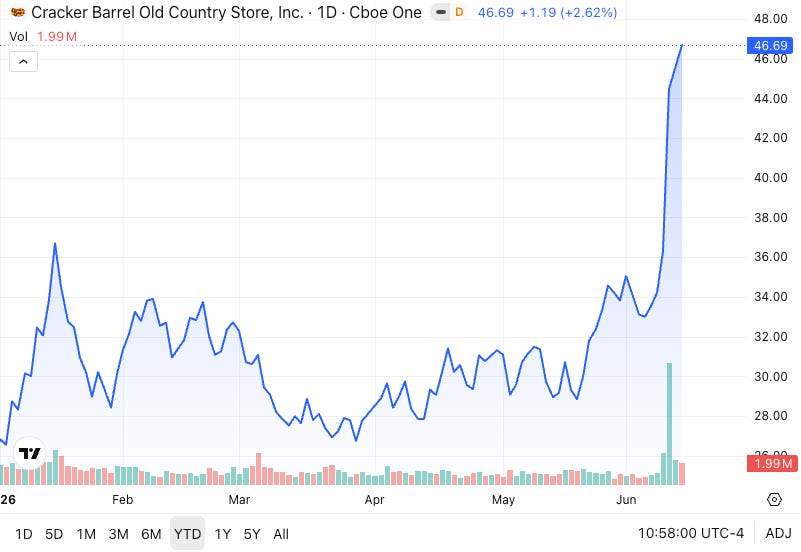
The investors who got paid weren’t the ones chasing a hyped debut, but the ones willing to look at an unloved business while everyone else looked away.
To be clear, I’m not recommending Cracker Barrel, and after this week’s move much of that easy money is gone. The point is the pattern.
Opportunity in public markets tends to come from other people’s overreactions, and overreactions cluster around boring, disliked, or embarrassing situations. They almost never cluster around the most marketed security in the world on its first day of trading.
Where I could be wrong and the Watchlist…
Fairness requires the other side. Facebook fell more than 50% in its first 18 weeks and went on to return over 1,600% for patient holders. Amazon lost most of its value after 2000 and became the buy of the decade anyway. If the AI buildout compounds the way bulls project, today’s prices will look quaint, and the day-one buyers will look prescient rather than impatient. Buffett’s model manages the odds, not the certainty.
Some IPOs work.
The data just says you shouldn’t expect yours to be the one that does.
SpaceX’s first earnings call as a public company, expected in July, with a rumored early lockup window two days after it.
Nasdaq-100 inclusion around July 7 and the mechanical index buying that follows.
Anthropic and OpenAI’s public S-1 filings, where the real financials replace the leaks.
Kraken and Securitize listing timelines as the crypto IPO window stays open.
Whether Figma and BitGo find their footing, the best live experiment on post-IPO price discovery.
The biggest IPO in history will still be there in six months, with public earnings reports and a lockup expiration behind it. Buffett wouldn’t spend five seconds on it today. The auction market is open all year.
Moving right along…
This Week In 2 Minutes

“How to Go From Idea to Usable Tool With AI in a Weekend” (June 9)
This past weekend I built a free Series 7 math trainer, and I never wrote a line of code. Three tools did the work in a chain: Claude Code as the engineer, GitHub as the filing cabinet, Vercel as the launchpad. I describe what I want, it builds and ships.
The tool is the least interesting part. What matters is that the cost of building the exact thing you need has dropped close to zero, so the bottleneck isn’t money or engineers anymore. It’s whether you notice a problem and reach for the tool.
The method runs in five steps: pick a real problem you already have, gather your raw material, describe the outcome instead of the code, work in short test-and-correct loops, and be the judge of whether the result is any good. That last step is the moat. Domain expertise is what lets you catch the model when it puts a formula in wrong, which means AI replaces the tedious work sitting under your judgment, not the judgment itself.

1,000 Advisors, $28 Trillion in AUM, and Only 1 Crypto Panel (June 12)
I spent this week at Wealth Management EDGE in Boca Raton, the largest gathering of senior RIAs in the country. Last year digital assets had a main-stage slot. This year it was one panel and one booth.
The conversation didn’t shrink so much as change shape. Crypto as an asset class got quieter while tokenization as infrastructure got louder, and private markets and AI dominated every track in the building.
The session that hit closest to home was Puerto Rico’s Act 60 regime, roughly 4% tax versus about 41% in Florida or 52% in New York City, now extended through 2055. That’s the structure I’m building around with a new RIA. The cautionary tale was a CoinShares altcoin-basket ETF down around 70% since October, with 0.96 correlation to Bitcoin and a near-1% fee. You get Bitcoin’s volatility, none of the diversification, and a bill on top.
This Week’s Winners 🏆
Cracker Barrel (CBRL). The boring-stock-bounces-back trade of the week. After a logo controversy left the stock for dead last August, Monday’s earnings tripled net income year over year and beat estimates badly enough to send shares up nearly 30% in a session. It’s now up more than 45% on the year. The lesson isn’t the chain itself, but that opportunity hides in disliked, unglamorous names while everyone stares at the launch pad.
SpaceX employees (all 4,000 of them). The biggest IPO in history minted an estimated 4,000 millionaires at Friday’s open, roughly 400 of them worth $100 million or more, including welders and cooks who took stock over salary a decade ago. A group of 100+ even built their own low-fee wealth management vehicle to handle the windfall. This is what winning an IPO actually looks like, and notice it has nothing to do with buying the open.
Cash on the sidelines. With roughly $8 trillion parked in money market funds and a 2026 IPO calendar that could demand north of $200 billion, dry powder is quietly the strongest position in the market. Patience is an asset that pays you to hold it right now. The investors with cash get to be buyers on their own terms instead of someone else’s exit.
…and Losers 📉
Anyone betting on a June rate cut. The setup flipped on bulls. May CPI came in at 4.2% year over year, well above the Fed’s 2% target, while the economy added 172,000 jobs and unemployment held at 4.3%. With inflation surging and the labor market healthy, the textbook next move is a hike, not a cut, and the risk now is a Fed bias shift from easing toward tightening. Rate-cut hope has been the market’s crutch all spring, and this week’s data kicked it out.
Crypto longs into the macro print. Digital assets traded defensively ahead of the Fed. Bitcoin’s pullback added pressure before the meeting, with the broad crypto drop signaling investors hedging out risk ahead of the policy decision. Rate expectations drive liquidity, risk appetite, and institutional positioning, which is why crypto reacts sharply to the Fed. When the discount rate is the swing factor, the most rate-sensitive assets get sold first.
Oversupply bears caught offside. The 2026 glut narrative ran into reality. A Reuters poll had Wall Street modeling WTI averaging around $59 for 2026 on China demand worries and rising OPEC supply, then geopolitics intervened and the IEA actually dialed back its oversupply warning after winter shocks. Anyone short energy on the glut thesis spent the week watching the opposite play out. Consensus positioning is most dangerous exactly when everyone agrees.
What to Watch For This Week 👀
SpaceX’s first index-inclusion wave (~July 7 setup). The mechanical story beats the narrative one. About 15 trading days after listing, SpaceX qualifies for the Nasdaq-100, triggering forced buying from every index fund that tracks it, with estimates running into the tens of billions. Watch whether that artificial demand props the stock or simply gives early holders a cleaner exit.
The next crypto S-1. With the IPO window open, watch for Kraken, Securitize, or another digital asset name to file. Each filing is a free look at real financials replacing years of private-round leaks. The terms they choose, lockup length, retail allocation, gross vs. net revenue accounting, will tell you how confident these companies actually are.
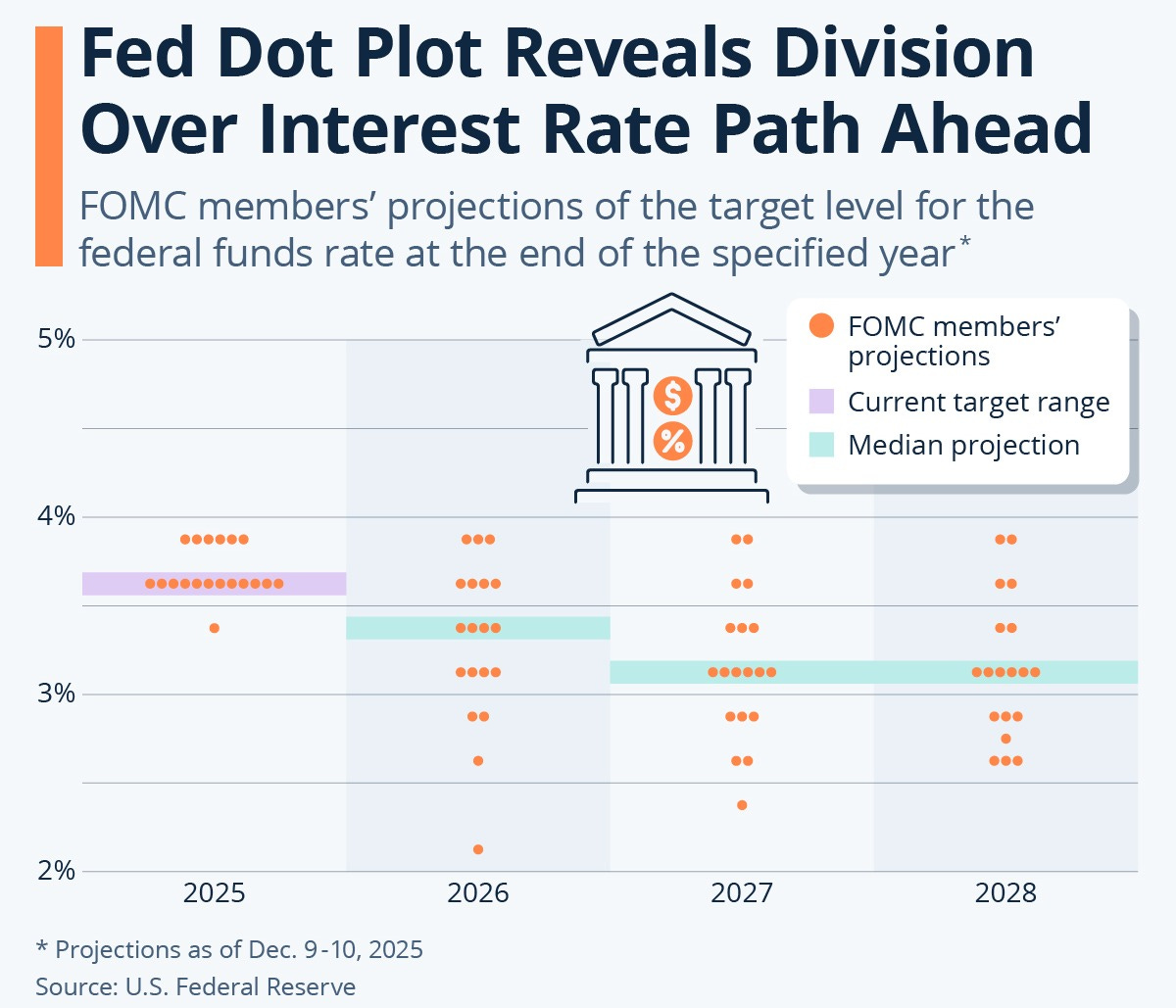
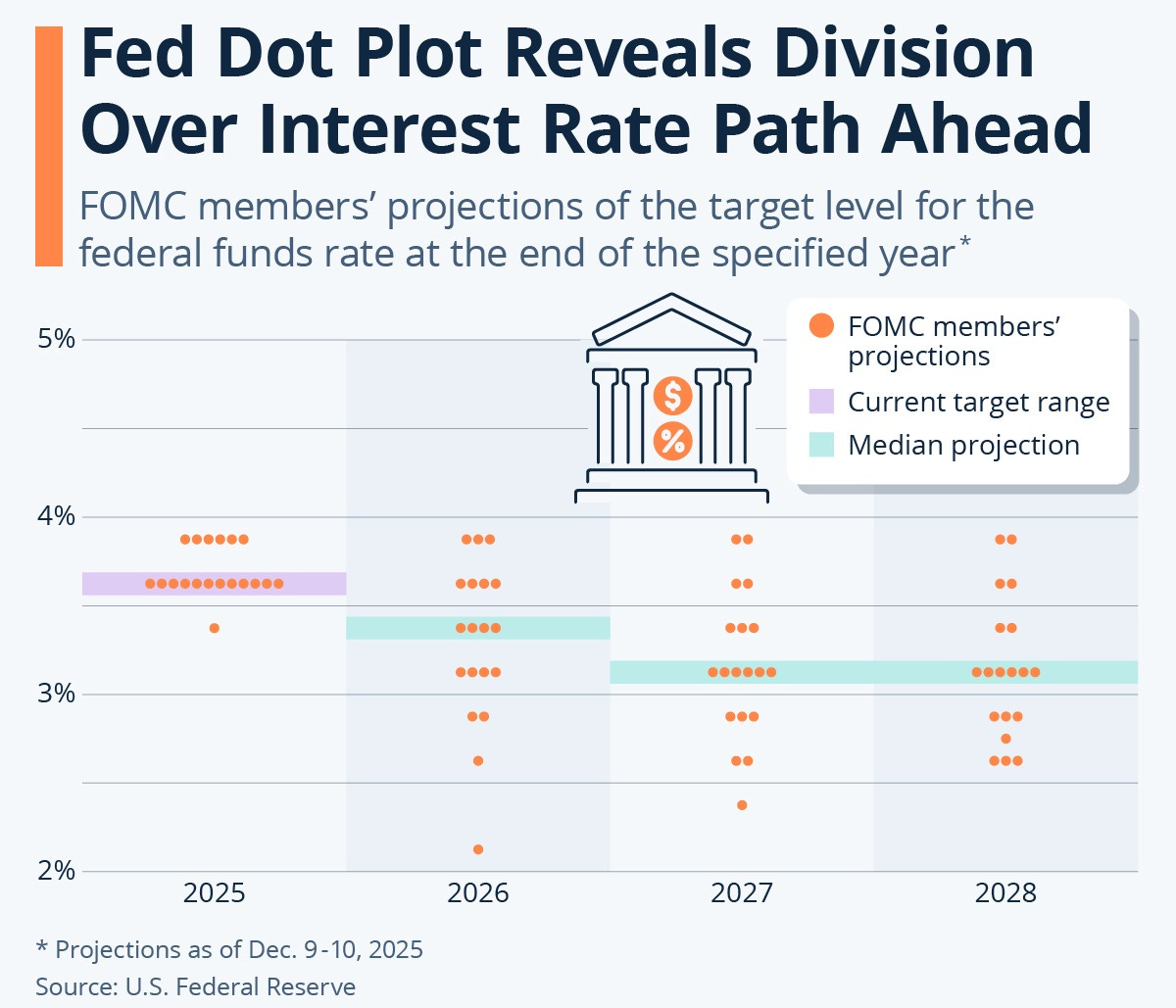
The Fed meeting and the dot plot. The June FOMC decision and updated projections land this week, and with rate-cut expectations getting repriced all spring, the dot plot matters more than the decision itself. Every IPO valuation in the pipeline, from OpenAI to Anthropic, is ultimately a bet on the discount rate. Cheaper money inflates these numbers; tighter money deflates them.
Matthew Snider is the founder of Block3 Strategy Group, author of “Warren Buffett in a Web3 World,” and publisher of the BitFinance newsletter. He holds a Series 65 and MBA, and has been an active participant in digital asset markets since 2015. This article is for educational purposes only and should not be considered financial advice. Always consult with a qualified professional before making investment decisions.
Sources
Edward Jones & FactSet, “Don’t Let Mega IPO Buzz Cloud Your Judgment”
Jay R. Ritter, University of Florida
Warren Buffett, CNBC interview, May 2019
University of Berkshire Hathaway (Pecaut & Wrenn)
Benjamin Graham, The Intelligent Investor
Fidelity Investments, “SpaceX IPO Explained”
Bloomberg, November 2025 — Figma shares falling below IPO price
InvestorPlace via TradingView, February 2026
FinTech Futures and Cointelegraph, January 2026
Forge Global, “Late-Stage Private Companies: The New Growth Investing”
Goldman Sachs Research — 2026 U.S. IPO volume projections; “25 Years On: Lessons from the Bursting of the Technology Bubble”
Cracker Barrel Old Country Store, fiscal Q3 2026 earnings release, June 2026; Fast Company and Investing.com coverage