Vegas Tore Down the Tropicana to Build a Baseball Stadium.
When I was thirteen, my mom took me to Las Vegas. I do not remember the name of the hotel. I remember the arcade.
Every casino on the Strip had one back then. It was the unspoken deal: parents could hit the floor, and the kids got parked in a neon-lit room full of Time Crisis, Jurassic Park, and those claw machines that never quite closed all the way.
You fed quarters into everything. You collected tickets. You left with a stuffed animal worth roughly twelve cents. The best part? NO PARENTS!…it was euphoric.
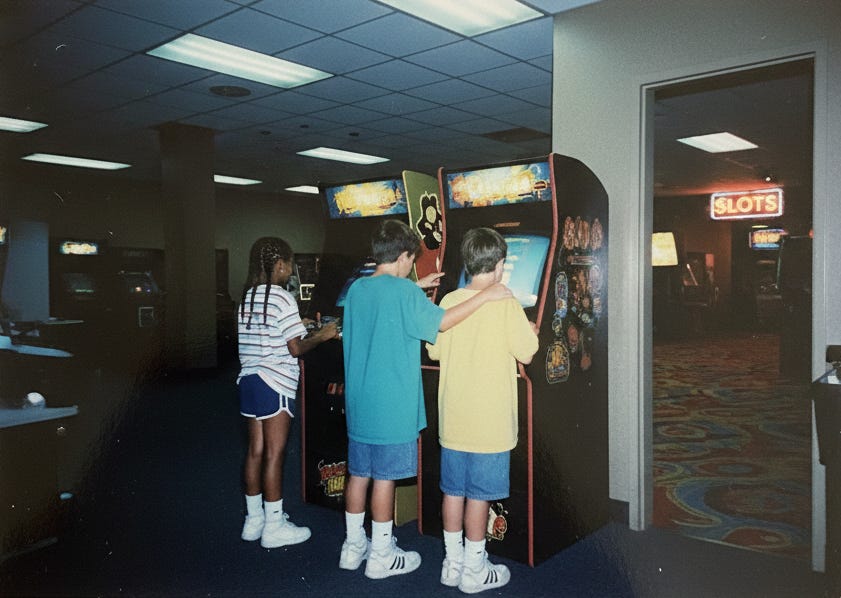
The slot machines in those days still had actual turning gears. Mechanical reels, physical levers, the satisfying clunk of metal. The casino floors were packed. The arcades were packed. Everyone had a place to be.
Vegas was built around one idea: get people through the door to gamble, then give everyone else something to do while they wait.
Those arcades are gone now.
All of them.
Not because kids stopped liking video games. Because the business model that supported them no longer exists. The families who used to come to Vegas and park their kids at the arcade while they sat at a $5 blackjack table? That visitor has been priced out, outcompeted, or simply found better options closer to home.
The city figured this out before most investors did.
The Tropicana Tells the Story
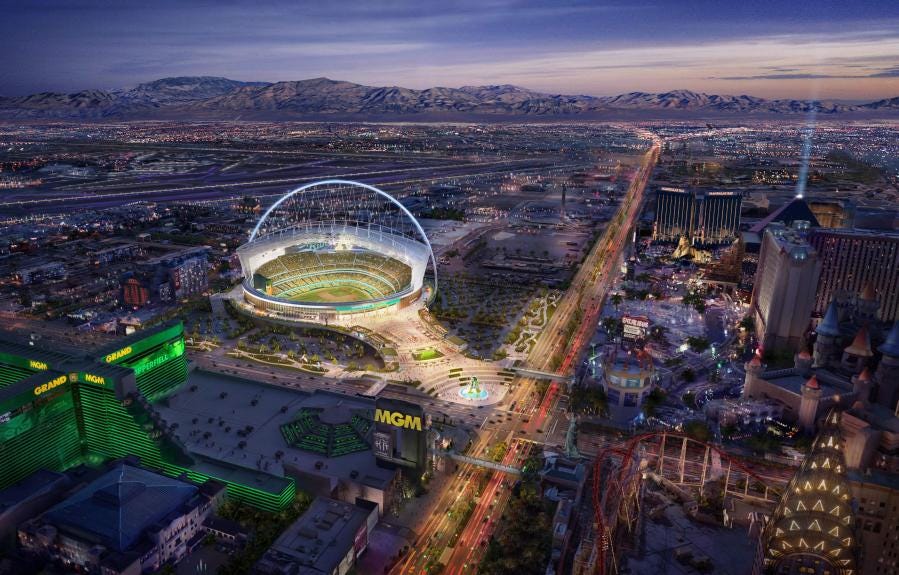
In 2024, the Tropicana was demolished. One of the original cornerstones of the Las Vegas Strip, razed to make way for a $1.5 billion Major League Baseball stadium for the Oakland Athletics. Fifty thousand square feet of casino floor and 1,500 hotel rooms replaced by 33,000 seats designed for spectators, not gamblers.
That is not a renovation decision. That is a capital allocation thesis. And it tells you exactly where the smart money thinks value is moving.
The numbers confirm what the wrecking ball implied.
In 2025, the Las Vegas Strip recorded $8.82 billion in Gross Gaming Revenue, a nominal all-time high. Sounds impressive until you realize that figure represents a 0.03% increase over 2024. Flat as a pancake.
Meanwhile, non-gaming revenue (entertainment, food and beverage, hotel rooms) now accounts for roughly 74 cents of every dollar spent on the Strip. Gaming gets the other 26 cents.
Read that again.
For every dollar a visitor spends in Las Vegas, three quarters of it goes somewhere other than the casino floor.
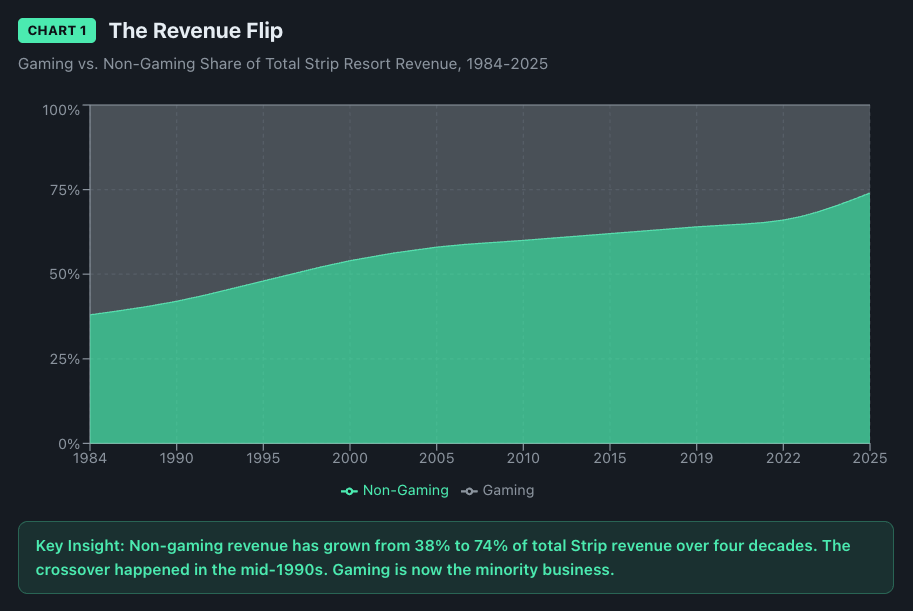
Gaming vs. Non-Gaming share of total Strip resort revenue, 1984 to 2025. Stacked area chart showing the crossover from gaming-majority to experience-majority revenue.
The Gambling Generation Is Not Gone. It Moved.
Here is the part that most analysts miss. Young people are not gambling less. They are gambling differently.
The generation that grew up on those casino arcades, playing skill-based games with flashing screens and instant feedback, did not lose the appetite for risk. They redirected it. They buy crypto. They trade zero-day expiry options. They rip baseball cards and Pokemon packs hoping for the hit. They bet on sports from their phones in states where it is now legal. They YOLO into call options on meme stocks.
They are absolutely gambling.
They are just not doing it at a blackjack table while staring at a screen.
This distinction matters for investors because it reframes the thesis. The question is not whether gambling is declining. The question is whether the Las Vegas Strip can capture the next generation of risk-takers through something other than the casino floor. The data says yes.
Millennials now represent approximately 50% of all visitors to Las Vegas.
Nearly 80% of them gamble at least once during their trip, but gambling is almost never the primary reason they came. In 2024, 25% of visitors cited a special personal occasion (birthdays, bachelor parties, anniversaries) as their reason for visiting. Entertainment and dining rank consistently above gambling as the primary draw.
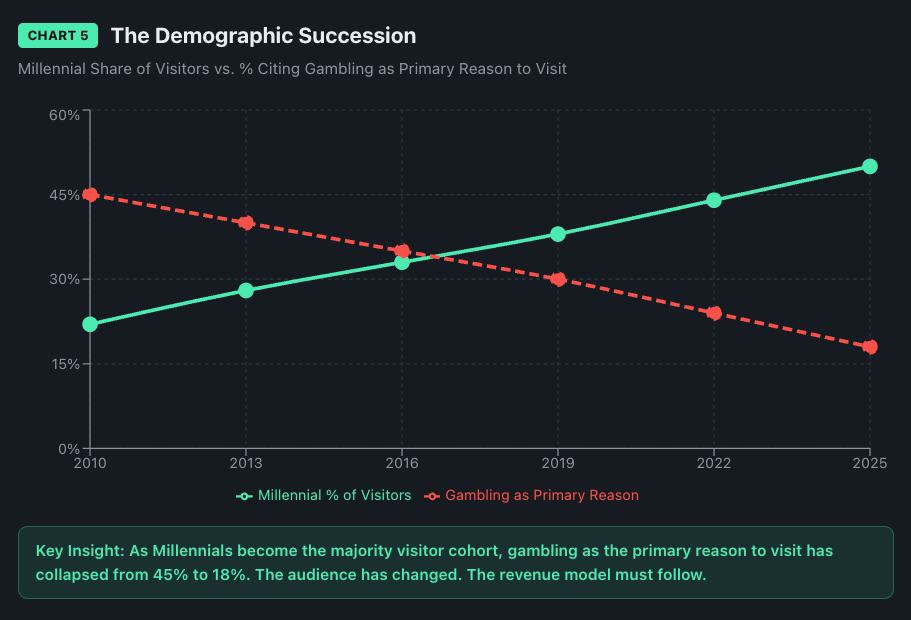
Millennial share of visitors climbing toward 50%, overlaid with the collapse of gambling as the primary reason for visit.
The Sports Catalyst
The single most important structural change to the Las Vegas economy in the last decade is not a new casino. It is a stadium.
Allegiant Stadium, home of the NFL’s Las Vegas Raiders, has generated an estimated $5.7 billion in total economic impact since opening in 2021. It has hosted 134 major events and attracted 5.4 million attendees.
Here is the number that matters most: 68% of those attendees are from out of town, and 90% of them say the stadium event was the primary driver of their trip.
That last data point is critical.
These are not people who happened to catch a game while visiting Vegas. These are people who booked flights and hotel rooms specifically to attend an event. They stay in high-ADR rooms. They eat at premium restaurants. They spend at a fundamentally different rate than the traditional mid-market gambler.
The NHL’s Vegas Golden Knights, valued at nearly $1.9 billion, have contributed to a 12,800% increase in sports-related wages in the Las Vegas metro area since 2010. The WNBA’s Las Vegas Aces won back-to-back championships and diversified the visitor base in ways the casino industry never could.
And then there is Formula 1. (🏎️ zoom zoom)
The F1 Las Vegas Grand Prix generated a $1.5 billion economic impact in its inaugural year. Even after the novelty discount in 2024, the impact was $934 million. But the per-visitor economics are staggering: F1 fans spend an average of $2,400 per person, excluding the cost of tickets. That is nearly three times what a typical tourist spends.
Premium experiences attract premium spenders. This is not a new concept, but the scale at which Vegas is proving it should change how investors think about the entire destination.
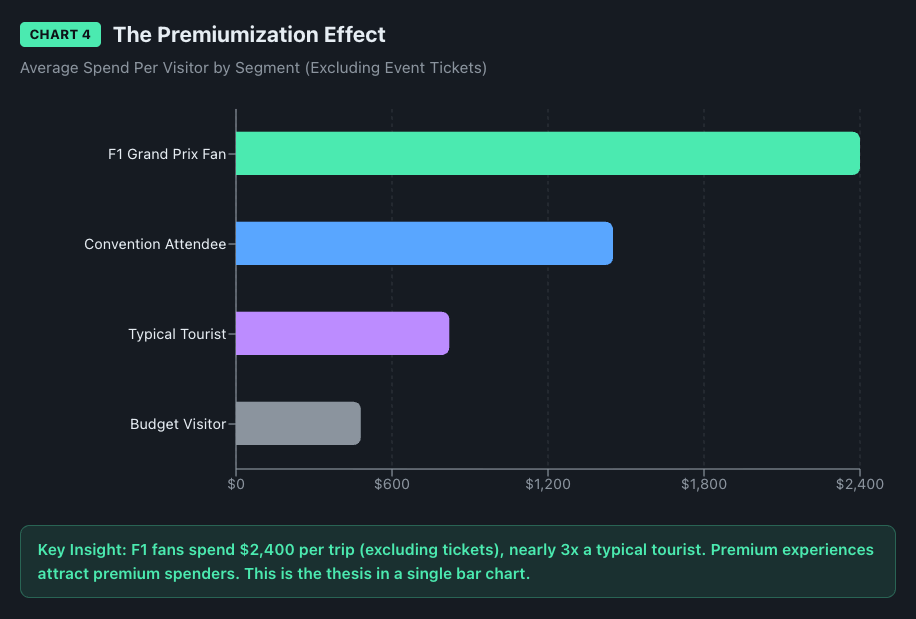
Average spend per visitor by segment. F1 fans at $2,400 vs. typical tourists at $820. The premium experience thesis in a single bar chart.
Sphere: A New Asset Class
If the Tropicana demolition is the most symbolic moment of the rebalancing, Sphere Entertainment is the most investable one.
Sphere (NYSE: SPHR) reported $1.22 billion in total revenue for fiscal year 2025. Its flagship production, The Wizard of Oz at Sphere, surpassed 2 million ticket sales and $290 million in revenue within months of opening. The venue runs four to five screenings per day, creating utilization rates that traditional concert venues cannot match.

In early 2026, SPHR shares surged 22% in a single session after reporting the company’s first quarterly profit since the venue opened. The stock is up roughly 150% over the past year. A $550 million refinancing extended liquidity through 2031, and the company has announced expansion plans for Abu Dhabi and National Harbor.
Let me be clear. Sphere is not a casino stock.
It is a media and technology platform that happens to sit on the Las Vegas Strip. It owns its content, its technology, and its distribution. That combination gives it margin expansion potential that a traditional gaming operator cannot replicate.
For investors tracking the rebalancing, the question is straightforward: would you rather own a company whose primary revenue driver is baccarat hold percentages (which swung 21% in a single month in late 2025), or one that is selling out a proprietary immersive experience four times a day?
The Flatline and the Rocket
Here is the simplest way to frame the investment case. Over the last decade, Strip gaming revenue grew approximately 40%. In the same period, the economic impact of sports and entertainment on the Las Vegas economy grew by roughly 4,650%.
These are not comparable growth curves.
One is a mature, structurally plateauing business. The other is an exponential adoption story. Both happen to exist on the same four-mile stretch of road in the Nevada desert.
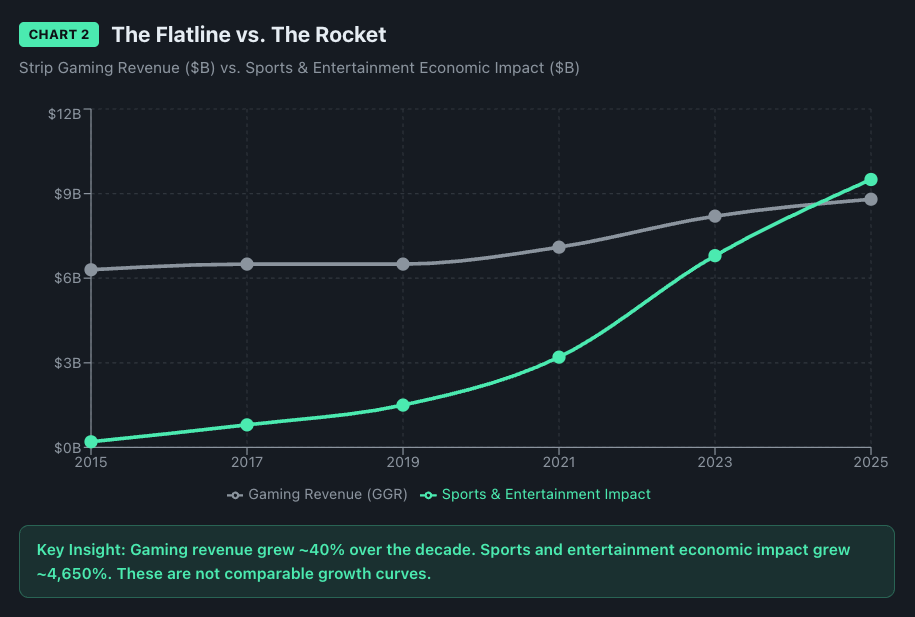
Strip Gaming Revenue vs. Sports and Entertainment economic impact, 2015 to 2025. Dual-line chart showing divergent trajectories.
The gaming revenue flatline is not a failure. It is a ceiling. Online sports betting is now legal in over 40 states. iGaming platforms let consumers in Pennsylvania play blackjack on their phones. The basic act of placing a bet has been commoditized. If you can gamble from your couch, the incentive to fly 2,000 miles to do it at a table is diminished.
What cannot be commoditized is the live experience. A Raiders game at Allegiant Stadium. An F1 race on the Strip. A residency inside the Sphere. These are scarce, location-specific, and impossible to replicate digitally. That is the new loss leader. That is the new reason to book the flight.
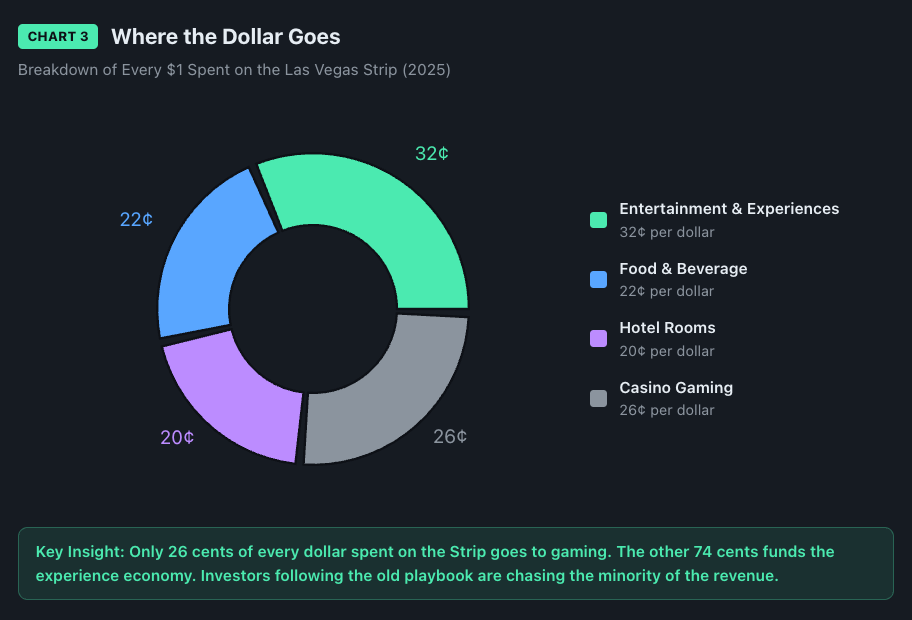
Donut chart showing the breakdown of every $1 spent on the Strip. 26 cents to gaming, 74 cents to experiences.
What’s Missing
There is one thing conspicuously absent from the Las Vegas reinvention:
digital assets.
There is no physical Solana casino. No on-Strip venue where you can walk in and gamble with digital assets on-chain. No partnership between a major operator and a stablecoin issuer to let visitors deposit, play, and withdraw in USDC. For a city that has historically been the first to adopt new forms of risk-taking, this is a notable gap.
The infrastructure exists. Stablecoins processed over $10 trillion in transactions in 2024. On-chain gaming protocols have been tested in multiple jurisdictions. The regulatory path is complex but navigable. If Las Vegas wants to remain the capital of where people take risk, it will eventually need to meet the next generation where they already are: on-chain.
That is a story for another article. But it is worth noting that the city willing to tear down a casino to build a baseball stadium has not yet figured out how to integrate the fastest-growing settlement layer in financial history into its entertainment model. Someone will.
The Investment Framework
For investors evaluating Las Vegas exposure, the old playbook of simply buying casino operators needs updating. Here is how the rebalancing suggests you think about it:
Prioritize yield over volume. Operators like MGM Resorts and Wynn that drive high average daily rates and non-gaming spend per visitor are better positioned than those dependent on foot traffic. MGM sits on $2.13 billion in cash and has strategically concentrated on the premium end of the Strip (Bellagio, Aria, Cosmopolitan).
Monitor the content play. Sphere Entertainment owns its content, its technology, and its venue. That is a fundamentally different margin profile than a casino that rents out space for a DJ. If Sphere’s global expansion works, it creates a platform model with recurring high-margin revenue.
Watch the sports calendar. The most profitable months on the Strip increasingly align with the sports calendar (F1, Super Bowl, March Madness, the eventual MLB season) rather than traditional gambling holidays. Capital that follows the sports flywheel will outperform capital that follows the gaming calendar.
Hedge with real estate. VICI Properties (NYSE: VICI) owns the land under many of the Strip’s most famous resorts, roughly 41,000 hotel rooms and 1.2 million square feet of gaming space. It offers the most defensive way to play the long-term appreciation of Strip real estate without the operational volatility of running a casino.
Conclusion
I think about those arcades sometimes. The neon glow, the sound of quarters dropping, the certainty that the casino floor was where the real action was. For decades, that was true.
It is not true anymore.
The real action is in the stadium. The Sphere. The restaurant that costs $400 a person. The F1 paddock. The convention center. The entire ecosystem of experiences that a generation of visitors is willing to pay a premium for, because the one thing you cannot do from your phone is be there.
Las Vegas tore down the Tropicana to build a baseball stadium. That is not nostalgia dying. That is capital flowing toward where the returns are. Investors would be wise to follow it.
Trade carefully out there. Skip the leverage. And if you’re looking for help integrating AI into your advisory practice or building a digital asset framework for clients, you know where to find me.
— Matthew
X: @bit_finance_
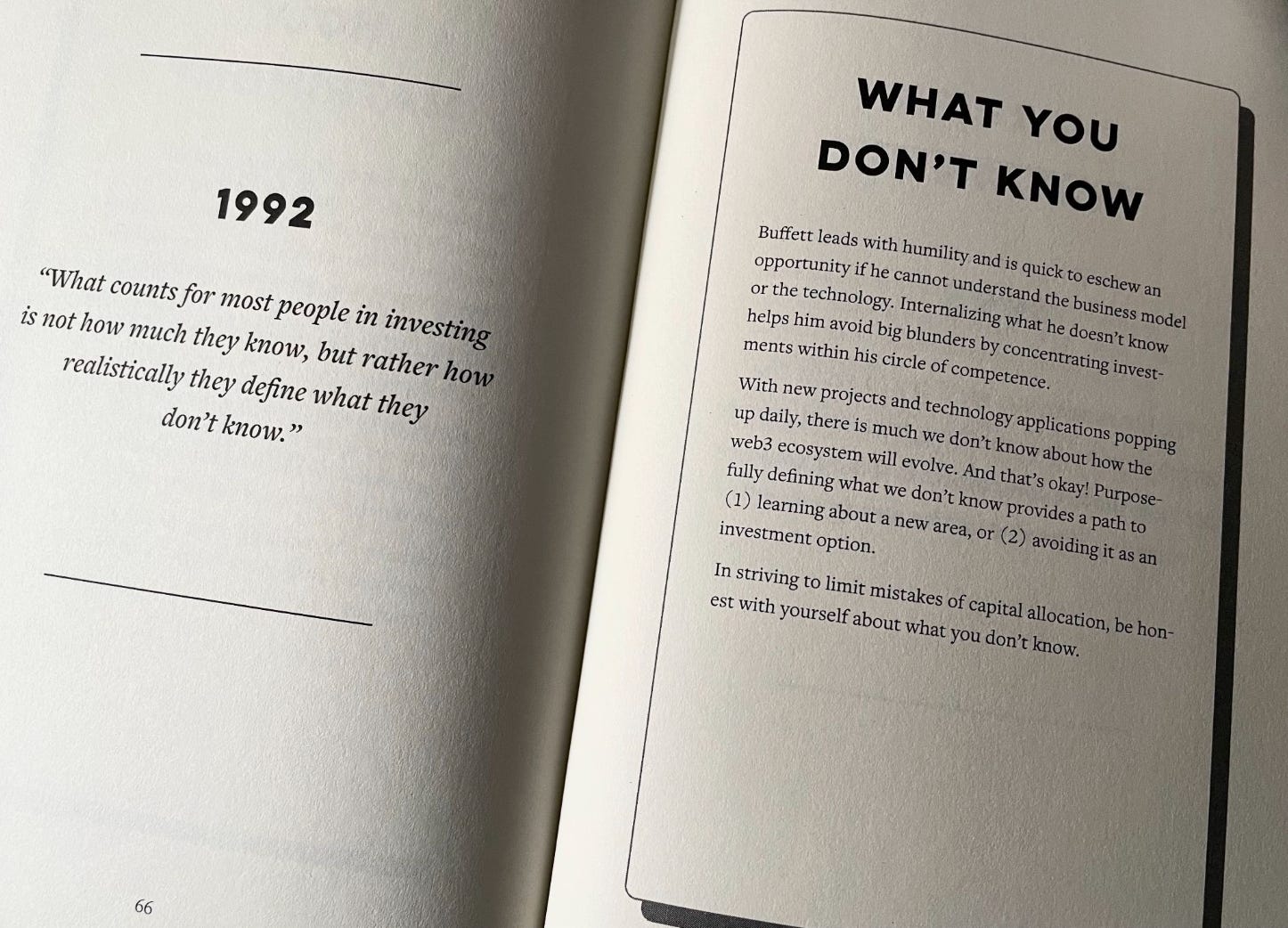
oh! one last thing…if you want to dive deeper into how Buffett’s investing principles applies to digital assets, check out my book.
We took 1,300+ pages of wisdom from the Oracle of Omaha and condensed it into a snackable, easy-to-read guide for digital asset investors. Pick up your copy today!
Matthew Snider is the founder of Block3 Strategy Group, author of “Warren Buffett in a Web3 World,” and publisher of the BitFinance newsletter. He holds a Series 65 and MBA, and has been an active participant in digital asset markets since 2015. This article is for educational purposes only and should not be considered financial advice. Always consult with a qualified professional before making investment decisions.
Graphic Data Sources: UNLV Center for Gaming Research, LVCVA Visitor Profile Study, Sphere Entertainment Co., American Gaming Association, Clark County Reports