The $300 Billion No One's Talking About
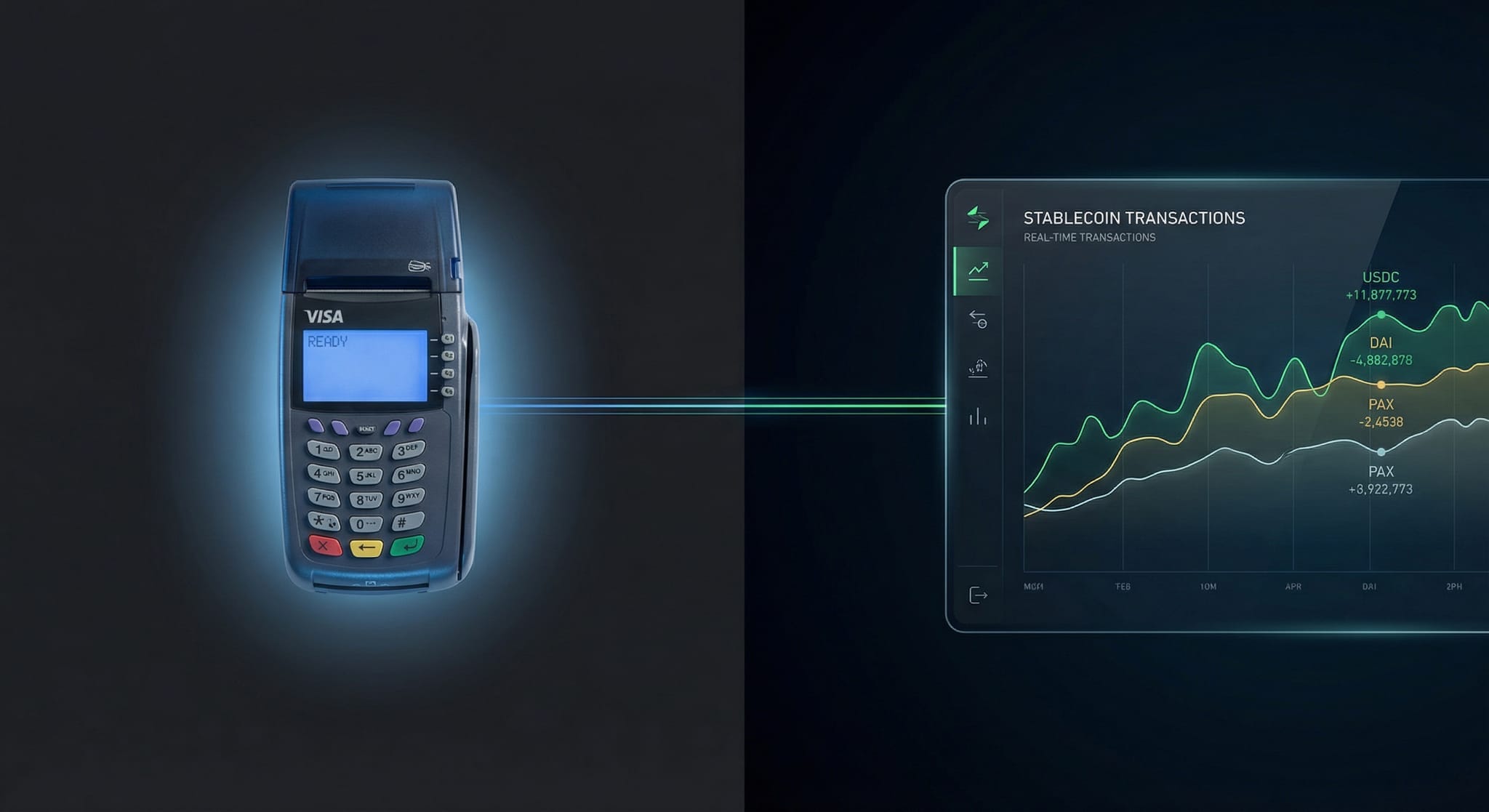
The conversations happening on Crypto Twitter and the conversations happening in institutional treasury departments have almost nothing to do with each other.
One group debates price.
The other builds plumbing.
This disconnect explains why most investors still think of tokenized real-world assets as speculation when, in practice, they’re watching infrastructure get laid. The kind of infrastructure that tends to become invisible once it works.
Think about the last time you considered Visa’s clearing rails while paying for coffee.
What Institutions Are Actually Doing
BlackRock launched a tokenized money market fund.
Franklin Templeton operates an entire fund on public blockchain infrastructure.
JPMorgan continues expanding JPM Coin for institutional settlements.
Goldman Sachs is exploring tokenized bond issuance.
These aren’t press releases about crypto experiments. These are operational decisions by institutions that don’t make operational decisions casually.
When BlackRock builds something, they expect to use it.
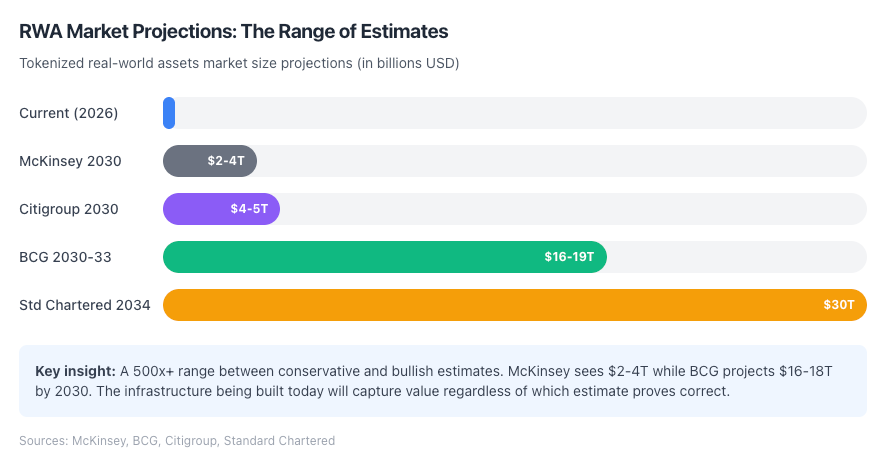
The projected market for tokenized RWAs reaches $300 billion by 2026.
That number matters less than what it represents: a 10x expansion driven primarily by institutions that aren’t waiting for retail sentiment to catch up.
“It Still Feels Like Speculation”
This is the most common hesitation I hear from traditional investors looking at this space.
And it’s reasonable.
The loudest voices in digital assets are usually trading, not building.
Price charts dominate the conversation. The infrastructure story doesn’t generate the same social media engagement.
But institutions allocate capital based on utility, not sentiment. They’re solving specific problems: settlement cycles that still run on T+2 when markets operate 24/7, liquidity trapped in illiquid structures, geographic friction in global capital flows.
Tokenized assets address these inefficiencies directly.
Around-the-clock settlement.
Fractional ownership of previously inaccessible assets.
Transparent verification without intermediary costs.
These aren’t theoretical benefits. They’re operational improvements that treasury teams can measure.
The speculation and the infrastructure happen to share the same underlying technology. They don’t share the same evaluation framework.
The Visa Parallel
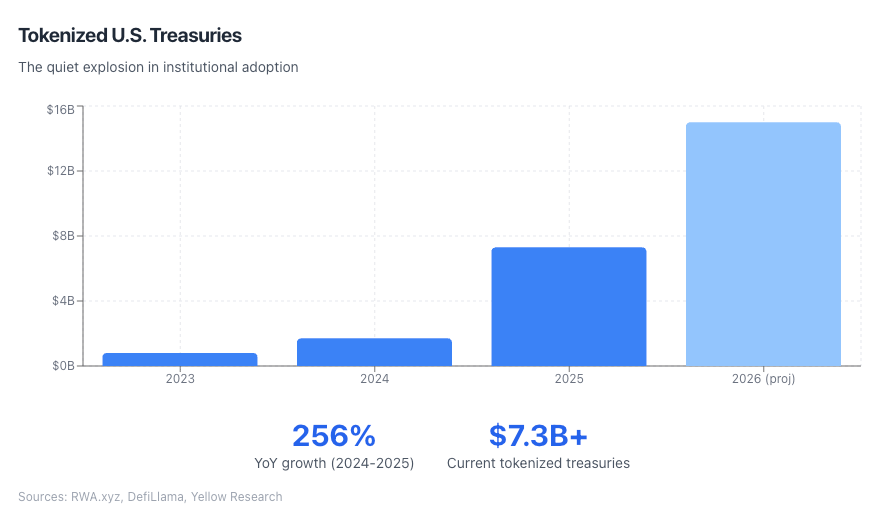
When payment rails were being built, the value wasn’t in predicting which merchants would adopt them.
The value was in the rails themselves.
Visa doesn’t need you to care about payment infrastructure. It just needs the infrastructure to work. Once it does, usage follows. The same dynamic applies here. Institutions aren’t building tokenization platforms because crypto prices might go up. They’re building them because the plumbing is better.
The internet buildout offers another useful frame.
The lasting value came from the underlying systems, not from trading the early applications. Most of the companies that captured durable value were infrastructure plays that became invisible to end users.
Amazon Web Services eventually became more valuable than many of the companies it hosted. The infrastructure captured value that individual applications couldn’t.
A Different Evaluation Lens
If tokenized assets reach projected scale, the platforms hosting this infrastructure become increasingly important. This suggests a different approach than watching token prices:
Which platforms have demonstrated institutional adoption, not retail trading volume?
What does real-world usage look like, independent of market sentiment?
Where is infrastructure development happening that might compound regardless of short-term price movements?
These questions don’t require predicting the market. They require observing what institutions are already doing and considering where that leads.
The Longer View
While investment discussions focus on sentiment, the buildout continues. Institutions move slowly, but they move deliberately. They’re not waiting for permission from retail investors or favorable price action.
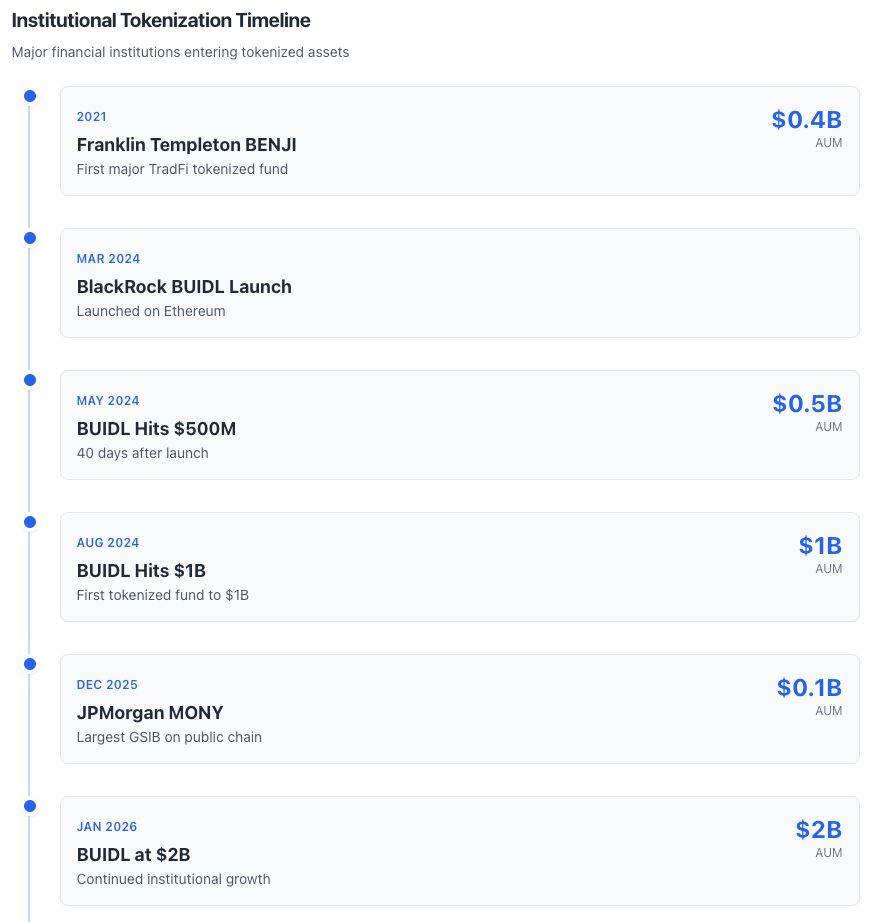
The infrastructure that enables a $300 billion tokenized asset market is being built now. Understanding that process doesn’t require conviction about any particular outcome.
It requires recognizing that the development is happening independent of the debate about whether it should.
Trade carefully out there. Skip the leverage. And if you’re looking for help integrating AI into your advisory practice or building a digital asset framework for clients, you know where to find me.
— Matthew
X: @bit_finance_
oh! one last thing…if you want to dive deeper into how Buffett’s investing principles applies to digital assets, check out my book.
We took 1,300+ pages of wisdom from the Oracle of Omaha and condensed it into a snackable, easy-to-read guide for digital asset investors. Pick up your copy today!