BitFinance Weekly Round Up 2/14

Something has shifted in the last few weeks.
I quickly went from writing about AI to building with it. And the gap between those two things is where most people are still stuck.
This week, I wanted to share a bit about what I’ve been cooking up to shed light on the opportunities in front of us to build with these awesome tools.
The $200 Experiment
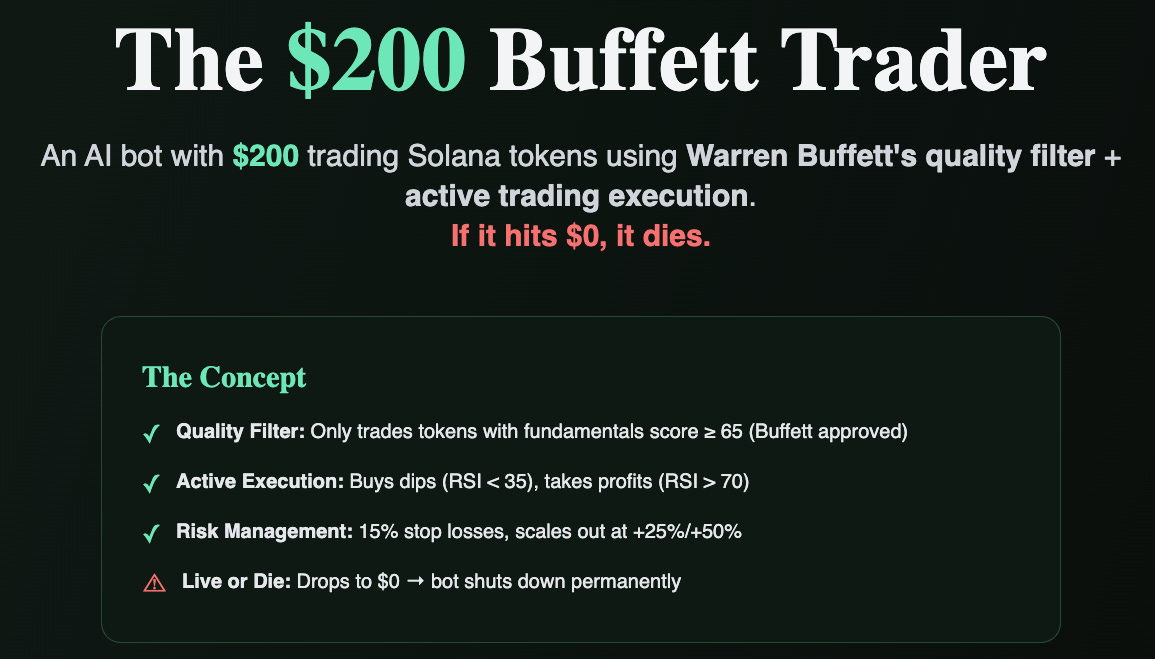
I built an autonomous trading bot that runs on Solana, holds its own wallet funded with $200 in USDC, and makes decisions based on a research framework I curated from the investment principles of Warren Buffett and Benjamin Graham.
The rule I gave it was simple: if you lose the $200, you die.
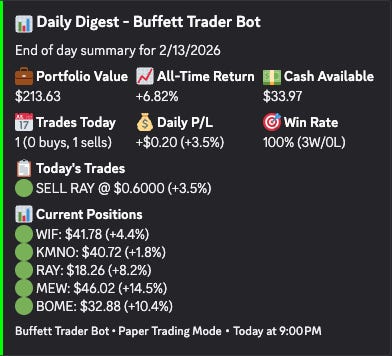
After five days, it’s up a about 6% and is 8 for 8 on trades. Here’s how I did it.
Step 1: Research with Gemini Deep Research
(30 Minutes)
I started with a question that sounds simple but isn’t: how do you translate the Buffett/Graham approach to finding “cigarette butts” (undervalued, overlooked companies trading below intrinsic value) into the crypto market, where fundamental value isn’t always obvious?
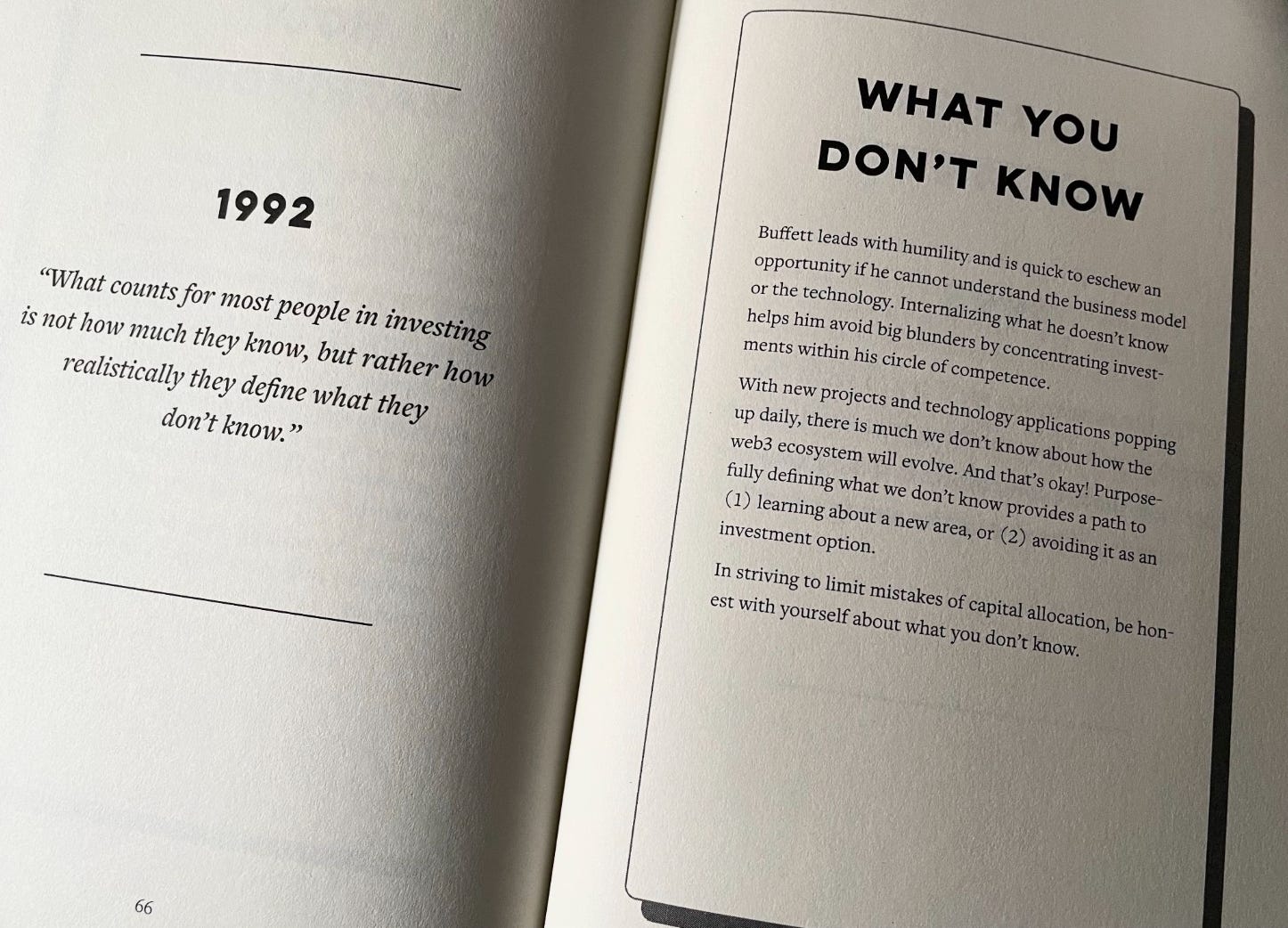
I know the Buffett framework well. I literally wrote a book on it. The challenge wasn’t the principles. It was the translation layer.
How do you apply price-to-book thinking to tokens?
What does a “margin of safety” look like in DeFi?
How can we value these as businesses?
So I did something meta:
I had Claude write a prompt specifically designed for Gemini Deep Research
The prompt was able to extract the maximum amount of structured, actionable information about Graham and Buffett’s quantitative screening criteria and how they might map to on-chain metrics.
Gemini chewed on it for about 20-30 minutes and came back with a detailed research synthesis. That became the foundation.

Step 2: Curating the Output
(The Part People Skip)
Here’s what most people get wrong about AI: the prompting is easy. The curating is the work.
When Gemini handed me back its research, I didn’t just pipe it straight into the next tool. I read it. I spot-checked it against what I know and further tailored the signal.
This is the step that separates people who use AI from people who build with AI.
The model gives you raw material.
You are the editor.
You are the quality filter.
Skip this step and you build on a shaky foundation.
Step 3: Claude Code Builds the Bot
(Half a Day)
I took the curated research and handed it to Claude Code with a clear brief:
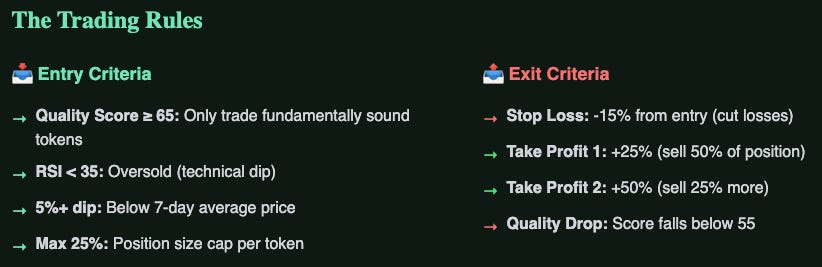
turn this into an automated, scripted set of criteria for a trading bot that can enter and exit positions on Solana.
It understood the framework immediately. But it took about two hours of back-and-forth to align on the architecture. The amazing thing is that these AI tools walk you through the process by asking you questions about what you are trying to achieve:
How would I like the bot would to connect to the wallet?
How it would evaluate positions?
How should it manage risk with only $200 on the line.
By the end of the day, the bot was live.
Step 4: The Dashboard and Discord Alerts
I didn’t stop at the bot. I also built a live dashboard to track its performance in real time using Vercel and Next.js (two tools I didn’t even know how to use a few weeks ago).
That’s the other thing about building with AI: you learn the stack by building, not by taking courses.
And through my Vesper Pax OpenClaw system, I get real-time updates in Discord every time the bot makes a move. I see what it bought, what it sold, and live tracking of PnL (profits and losses).
The Bigger Picture: Inversion Thinking
People ask me where I see this going.
Here’s my framework: inversion.
Don’t ask “how do humans do manage money?”
Ask “If given its own wallet, trading logic frameworks and the ability to operate autonomously, how might AI manage a portfolio?”
This trading bot is one application. But the mental model extends everywhere. AI agents will have their own wallets. Their own accounts. Their own places to engage with other AI. Their own environments to learn in.
I’m already thinking about applications in games, in competitive strategy, in areas where decision-tree logic and risk management overlap.
Think about it. The same principles that make a good value investor make a good chess player make a good autonomous agent.
The options are endless. But only if you start building.
Start Now
If you’re reading this and you haven’t started building with AI yet, here’s my honest take: the window where this feels hard is closing fast.
Every week the tools get better.
Every week the barrier drops.
But the people who will benefit most aren’t the ones who waited for it to be easy. They’re the ones who started when it was still a little messy.
I started with $200 and a rule. What are you going to start with?
Moving on…
TL;DR: This Week’s Posts

The $300 Billion No One’s Talking About (Feb 9)
Crypto Twitter debates price. Institutional treasury departments are all making operational bets on tokenized real-world asset pipes and plumbing.
BlackRock launched a tokenized money market fund.
Franklin Templeton operates an entire fund on public blockchain infrastructure.
JPMorgan continues expanding JPM Coin for institutional settlements.
Goldman Sachs is exploring tokenized bond issuance.
The projected market hits $300 billion by 2026, and the growth is being driven by institutions solving real problems (settlement speed, liquidity, geographic friction) not by retail sentiment.
Think Visa’s payment rails, not Visa’s stock price. The infrastructure story doesn’t generate engagement.
It does generate allocation.
7 Questions Your Financial Advisor Should Be Able to Answer About Crypto
(Feb 13)
Two weeks ago, I knocked on the door of a dozen financial advisors to talk about crypto. One wanted to have a conversation.
The ratio is improving, but the gap between client demand and advisor readiness is still enormous.
56% of advisors now personally own digital assets,
94% report client inquiries, yet
62% say recommending Bitcoin doesn’t align with their fiduciary duty.
That disconnect is the story.
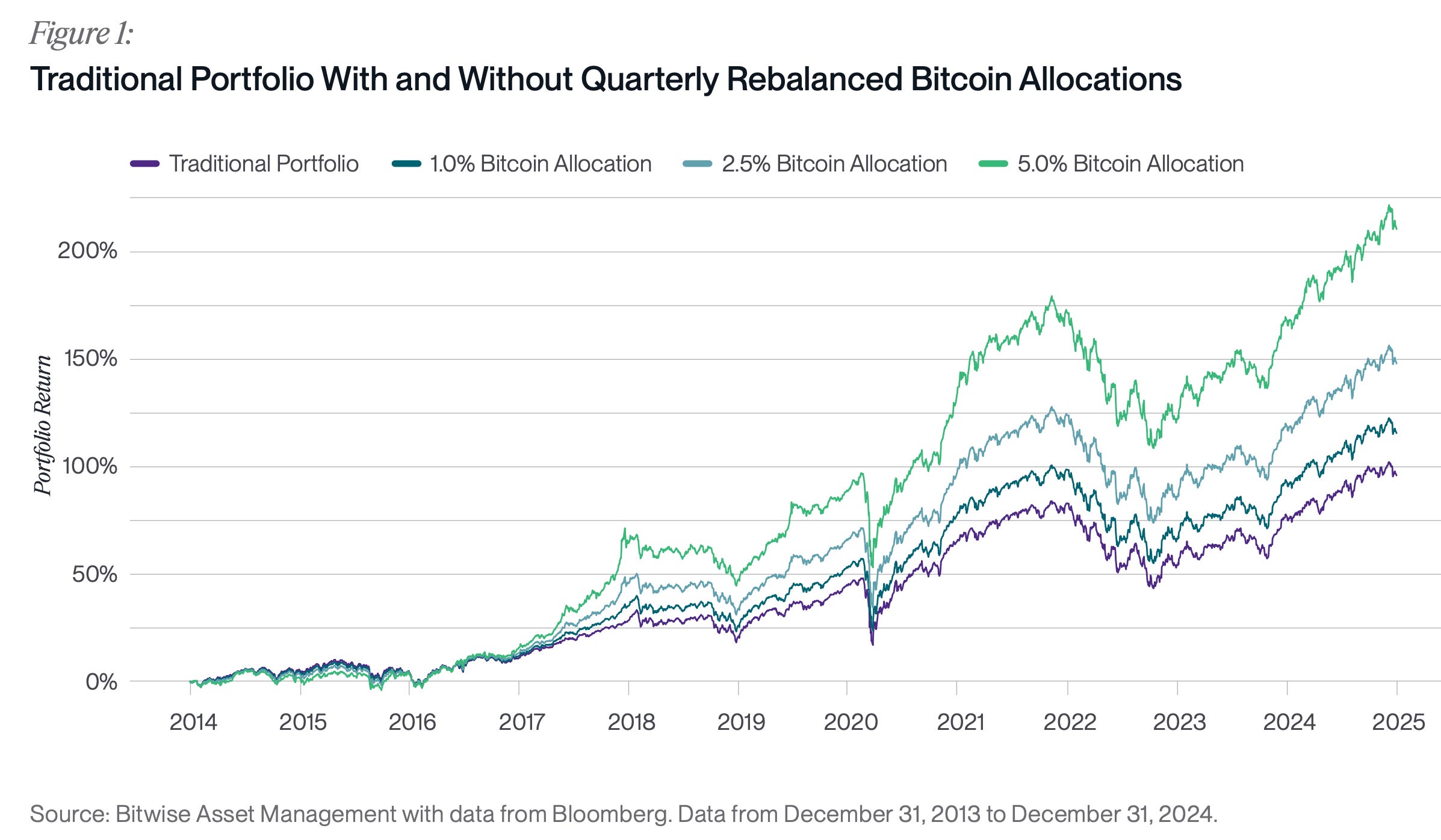
This piece gives you seven questions to bring to your next meeting, from how they think about allocation ranges (the math favors 1-5%) to how they’d actually custody a position.
And if they go 0 for 7? Don’t fire them. Ask if they’d collaborate with someone who can fill the gap.
Winners & Losers (Week of Feb 9)
🏆 Winners
SPHR (Sphere Entertainment) — From $24 to $116.
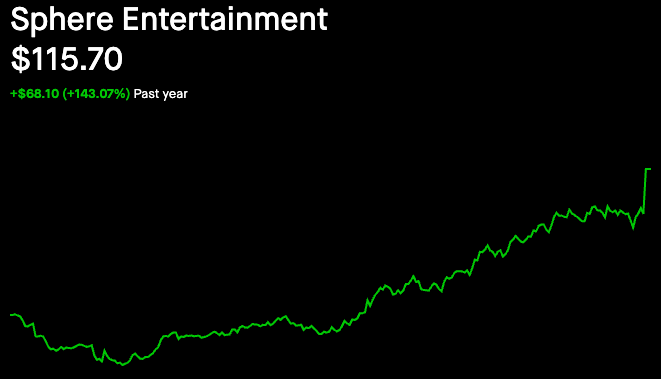
A year ago, Sphere Entertainment was trading under $24. This week it’s north of $116. The catalyst? Q4 earnings that obliterated expectations. EPS came in at $1.23 versus a forecasted loss of $0.30, a 510% earnings surprise that sent shares up 19%. The company that everyone called a boondoggle a.k.a. “James Dolan’s $2.3 billion LED ball in the desert” is now a $4.1 billion market cap and just posted its first meaningful profitability. They’re expanding globally, with a second U.S. Sphere planned for National Harbor, Maryland, and additional international projects. The lesson here isn’t about Sphere specifically. It’s about what happens when the market prices something as a gimmick and the builder keeps building. Sound familiar?
SPOT (Spotify). Beat on EPS, beat on revenue, added 11% more monthly active users year over year to 751 million. Stock popped 15% on the print. Turns out a business model built on subscription revenue holds up better than one built on ad spend and hype cycles.
RIVN (Rivian). Surged 14% after guiding 2026 deliveries 47-59% higher than 2025 and posting a narrower loss than expected. Revenue topped estimates at $1.29 billion. The EV space is brutal, but Rivian is showing signs it might actually survive it.
📉 Losers
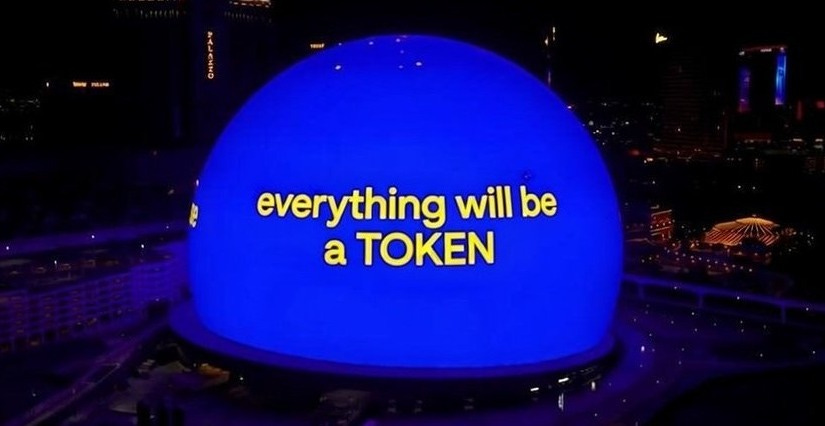
Coinbase. Missed on both top and bottom line. EPS of $0.66 vs. $1.05 expected. Revenue dropped 22% year over year to $1.78 billion. A $667 million net loss driven by unrealized crypto markdowns. Stock fell ~8% on the day. The “Everything Exchange” narrative is getting tested by a market that’s giving it nothing to exchange. In an ironic twist, guess where they spent $57 million on their viral SuperBowl ad…the SPHERE! 🤣
Bitcoin and crypto. BTC hovering around $66,000-$70,000 in a choppy range. Down over 45% from October’s all-time high of $126,000. Memecoins down 34% in a month. Fear and Greed Index hit 5 over the weekend; the lowest fear index on record! Digital gold continues to trade like digital tech.
Software stocks (again). The AI disruption narrative isn’t letting up. RELX dropped 17% after Anthropic launched a legal productivity tool. Trade Desk hit lows not seen since April 2020. Booking Holdings at levels last seen in October 2024. When AI builds your competitor overnight, multiples compress fast.
Looking Ahead: Week of February 17
Presidents’ Day (Feb 17): Markets closed Monday. Short trading week. Low liquidity and low volumes. Trade accordingly.
FOMC Meeting Minutes (Feb 18): The Fed held at 3.50-3.75% last meeting. These minutes will reveal how the committee is thinking about the stronger-than-expected jobs data and cooling CPI. Rate cut expectations just shifted to July from June. Any hawkish language accelerates that timeline further.🦅
Walmart Earnings (Feb 19, before open): The most important consumer read of the quarter. E-commerce surged 27% last print. Revenue estimate sits around $190 billion. With retail sales data coming in flat and beef inflation climbing, this call will tell us whether the American consumer is holding up or just showing up at Walmart because they have to.
Trade carefully out there. Skip the leverage. And if you’re looking for help integrating AI into your advisory practice or building a digital asset framework for clients, you know where to find me.
Until next week.
— Matthew
X: @bit_finance_
oh! one last thing…if you want to dive deeper into how Buffett’s investing principles applies to digital assets, check out my book.
We took 1,300+ pages of wisdom from the Oracle of Omaha and condensed it into a snackable, easy-to-read guide for digital asset investors. Pick up your copy today!