An Update on What We're Building, Where We're Going and How You Can Join!

Real research, and the tools that come out of it, shouldn’t sit behind institutional doors. That’s the thesis we’ve been quietly building against for the past few months, and today we want to lay out what’s been taking shape, why it matters, and how the people on the other end of this list can be part of it from the start.
BitFinance has shifted in the past few months from written contributions to driving tangible value for readers and traders. The work has gone into systems, methodology, and tools we can put in the hands of the community, with the same kind of discipline you’d find inside a real institutional desk. Today’s the right moment to surface it.
The problem we’re solving for
Retail traders, whether they’re working in equities, digital assets, or futures, are operating on thinner edges than they were ten years ago. Markets are more competitive as information advantages shrink, and execution speed catches up across most platforms. What used to be the dividing line between a good independent trader and an institutional desk has narrowed to a single thing, which is access to research that’s been done with rigor.
That kind of access still tends to live in places most retail traders can’t reach, and the asymmetry is the thing we’re trying to close.
The retail tools market hasn’t kept up with that reality.
Most paid indicator products report a Sharpe ratio without telling you how many parameter combinations were tested before settling on the one that looked best. Most published win rates come from a single market regime.
(e.g. don’t be like this…👇🏻)
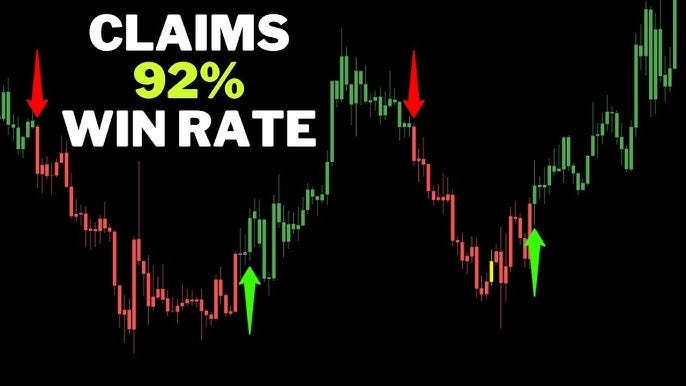
Most “where this works” stories don’t include a “where this fails” page. None of those omissions are accidents, since the marketing economics of the space depend on them. The work we’re doing assumes the opposite economics.
How we’re solving it
We’ve spent the past few months building the four pieces of an alternative that lives outside the institutional walls but operates inside the institutional standard. We own all four of them, which matters more than it sounds.
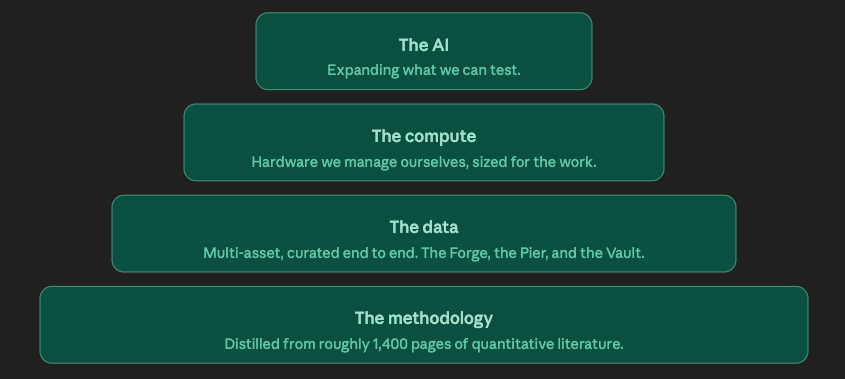
The methodology is the foundation, and it’s the piece carrying the most weight.
It’s distilled from roughly 1,400 pages of quantitative literature into a process that describes what we build, what we validate, what we kill, and what we publish. The architecture is two-tiered.
The Eight-Gate Framework is what every fund-deployable strategy has to clear before it sees client capital.
The Retail Validation Standard is the scoped version we apply to indicators that traders combine with their own discretion, with five gates and a trial-count haircut applied to every reported Sharpe ratio.
Without that layer, the rest of the stack is just expensive hardware running fancy math.
On top of that sits data we own and control. It’s multi-asset, curated end to end across what we call the Forge, the Pier, and the Vault.
The Forge is where strategies are built and stress-tested under realistic cost and slippage assumptions.
The Pier is where data lands, gets cleaned, and is held to institutional quality bars before it ever touches a backtest.
The Vault is where validated strategies live in a registry that feeds the multiple-testing correction across every trial we’ve ever run, which is what stops a lucky parameter sweep from quietly becoming a marketing chart.
Each one earns its place, and we’ll go deeper on each in coming posts.
Above the data, compute we own and control. A Mac Studio purpose-built for systematic backtesting, sized to handle 150 to 200 hypothesis trials per day. The constraint on quant research has historically been compute. For us, the binding constraint is hypothesis count, not throughput. Patience is a competitive advantage in this kind of work, and ownership is what makes patience affordable.
At the apex, AI used the way it’s actually useful, which is to expand the surface area we can test before we commit to anything. Judgment still does the deciding.
What rigor actually looks like
Most retail products show you the polished output. Our framework is built around showing you the discipline.
Every indicator we ship gets a one-page disclosure pack that publishes the trial count, the regime decomposition, the 30-day forward paper trading result, and a labeled section called “where this fails.”
That last section is mandatory. The point of it is to make sure you know exactly what conditions the tool isn’t designed to handle, before you put real money behind it.
Our published Sharpe numbers will look lower than the competition’s, on purpose, because we apply a haircut that scales with the number of variants we tested. Applying that haircut is the only honest way to report results when you’ve tried twenty versions of an idea before settling on one. If you’ve ever wondered why a backtest looked clean and live trading looked different, this gap is most of the answer.
Every trial that runs through the Forge gets logged. Most of them will fail. Some of those failures will become teardowns we publish openly, because the misses are usually where the actual lessons live. Treating them as part of the deliverable is the kind of work we want our name on.
What’s coming…
BitFinance is already the community. The list you’re on, the conversations in the comments, the people who reply to these emails are the thing. What’s changing is where the community can meet, and what it has access to.
Over the coming months, we’re expanding into Discord, where the community can engage directly with the tools the methodology produces. That’ll start with indicators across digital assets and traditional equities, with more coverage to follow. The Discord is going to work as a live feed of the methodology in operation. You’ll see strategies enter the pipeline and exit it. You’ll see the council reviews where we pre-mortem candidates before they consume serious research time. You’ll see the wins and the failures published with the same care.
We’re also rolling out premium content featured here on Substack, for readers who want a deeper look at the methodology, the tools, and the work behind specific indicators.
Not to worry, the weekly roundup, the educational pieces, and the broader market commentary aren’t going anywhere. They stay free.
Some of you have already expressed interest in working with automated and AI trading bots. You’re on this list too, and the same access applies. Whatever shape your interest takes, we want you positioned to see things first.
That’s the arc. Some of the dates will move, and the standards won’t.
How to reserve your spot
Nothing changes for you today. The Substack continues at the cadence you’re used to, and the work continues.
If you’d like first access when Discord opens and the first indicators ship, this is where to raise your hand.
Interested? Fill out the 30-second interest form here. 👈
We’re genuinely excited about what’s taking shape, and we’d rather show you than tell you about it. Stay tuned for what’s next.
This Week In 2 Minutes

Saylor’s Bitcoin 2026 Pitch: Bitcoin Is the Collateral. Digital Credit Is the Product. (Apr 29)
Saylor closed Bitcoin 2026 with a pitch that had almost nothing to do with Bitcoin’s price. STRC, Strategy’s perpetual preferred stock, has reached roughly $8.5 billion in notional value in nine months, pays an 11.50% monthly variable dividend, and gets return-of-capital tax treatment.
The structural argument is that if Bitcoin compounds faster than equities or real estate, credit issued against it can sustainably yield more than credit issued against anything else.
The DGCR ETF approval is the next domino worth tracking, since it would hand structured credit allocators a regulated wrapper for the whole architecture overnight.

The Quiet Pivot Inside Ripple That Reframes How to Think About XRP (May 1)
The press still writes about Ripple the way they wrote about it in 2022, and that mental model is badly out of date. Three acquisitions (Ripple Prime, GTreasury, and Rail) added up to roughly $4 billion and turned the company into a full-stack institutional finance platform with a token threaded through every layer.
The most consequential moment of 2026 wasn’t a price move but Ripple Prime’s March 2 listing in the DTCC’s NSCC participant directory, which routes XRP-linked infrastructure into the same U.S. clearing rails that handle $2 quadrillion in annual transactions.
Owning Bitcoin doesn’t preclude owning XRP, and the thesis for each one is a genuinely different bet.
Weekly Winners 🏆
Records on the equity side, a constructive April close in crypto, and the best earnings beat rate since 2021.
S&P 500 and Nasdaq. Both indexes printed fresh closing records Friday, with the S&P at 7,230.12 and the Nasdaq at 25,114.44. Q1 earnings are doing the heavy lifting. 84% of S&P 500 companies that have reported are beating EPS estimates, the highest beat rate since Q2 2021, and the index is tracking toward its strongest earnings growth since Q4 2021.
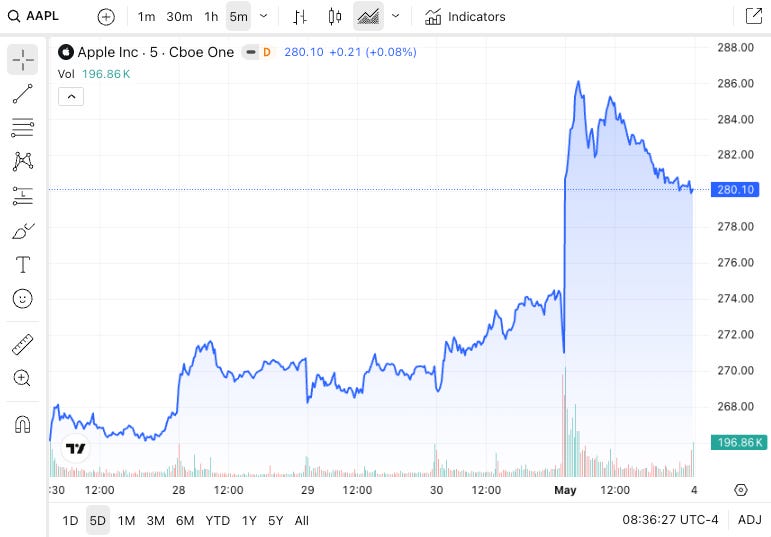
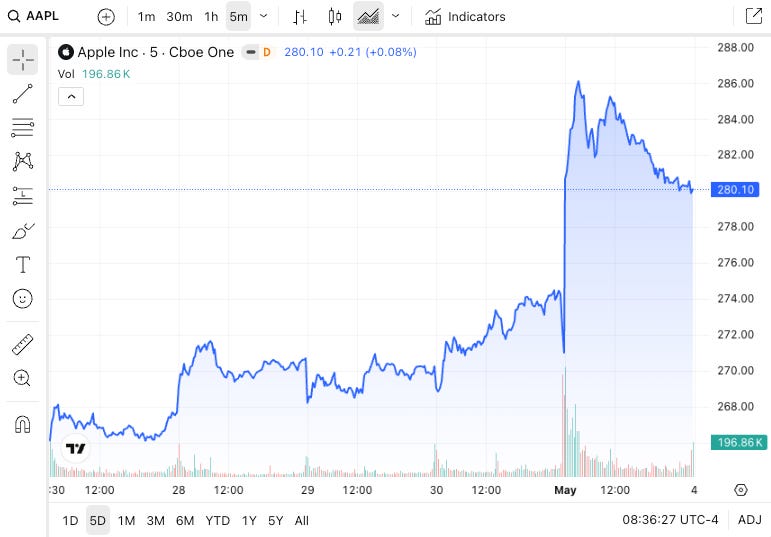
Apple (AAPL). Up roughly 3% Friday on a fiscal Q2 beat and a better-than-expected revenue outlook. iPhone revenue missed for the second time in three quarters, but China strength and the new iPhone cycle absorbed the slip. The print pulled the rest of mega-cap tech with it.
Bitcoin. April closed positive after a difficult first quarter, with BTC opening May above $78,000 and printing four straight green weeks. The April high near $79,500 is now the line that matters, with the historical pattern showing clearing it early in May tends to extend the rally and failing it tends to invite a pullback.
Software earnings rebound. Five9 jumped roughly 30% Friday on a clean print that quieted AI-disruption fears in the SaaS complex. Wolfspeed added 26% on new executive appointments and Cboe Global Markets ran 9% to lead financials. After IBM and ServiceNow dragged software two weeks ago, this was a meaningful breadth signal.
Weekly Losers 📉
Trust-and-safety regulation hit one platform hard, an airline ran out of road, and Berkshire’s transition is getting expensive.
Roblox (RBLX). Down roughly 24% Friday after slashing full-year bookings guidance to $7.33-$7.6 billion from $8.28-$8.55 billion prior. Management cited product changes around age verification and expanded content monitoring tied to multiple regulatory probes on child safety. The bigger signal here is broader than one guidance miss, since trust-and-safety regulation eating into growth is going to come for more than one platform built on permissionless content.
Spirit Aviation Holdings (SAVEQ). Down 62% Friday to 52 cents on a Wall Street Journal report that the budget carrier is preparing to liquidate its fleet and end operations after bondholders walked from a proposed $500M government rescue package. Penny-stock moves are noisy by definition, and the Spirit story is also a reminder that the post-COVID survivor pool in U.S. consumer airlines is still narrowing.

Berkshire Hathaway (BRK.B). Greg Abel’s first annual meeting as CEO went off Saturday in Omaha, with Buffett seated in the audience and praising his successor on a recorded segment. The capital allocation question is what’s actually under the microscope. BRK.B has trailed the S&P 500 by more than 30 percentage points since Buffett signaled his step-down last May, and Abel is now under real pressure to deploy a record cash pile thoughtfully rather than chase the index.
Ether (ETH). Opened Thursday at $2,252, the lowest print since April 13, while BTC held near its monthly highs. The relative weakness has been a steady theme through Q1 and into Q2, and the bull case for ETH increasingly leans on regulatory catalysts that haven’t shown up yet.

On Deck
What to watch the week of May 4.
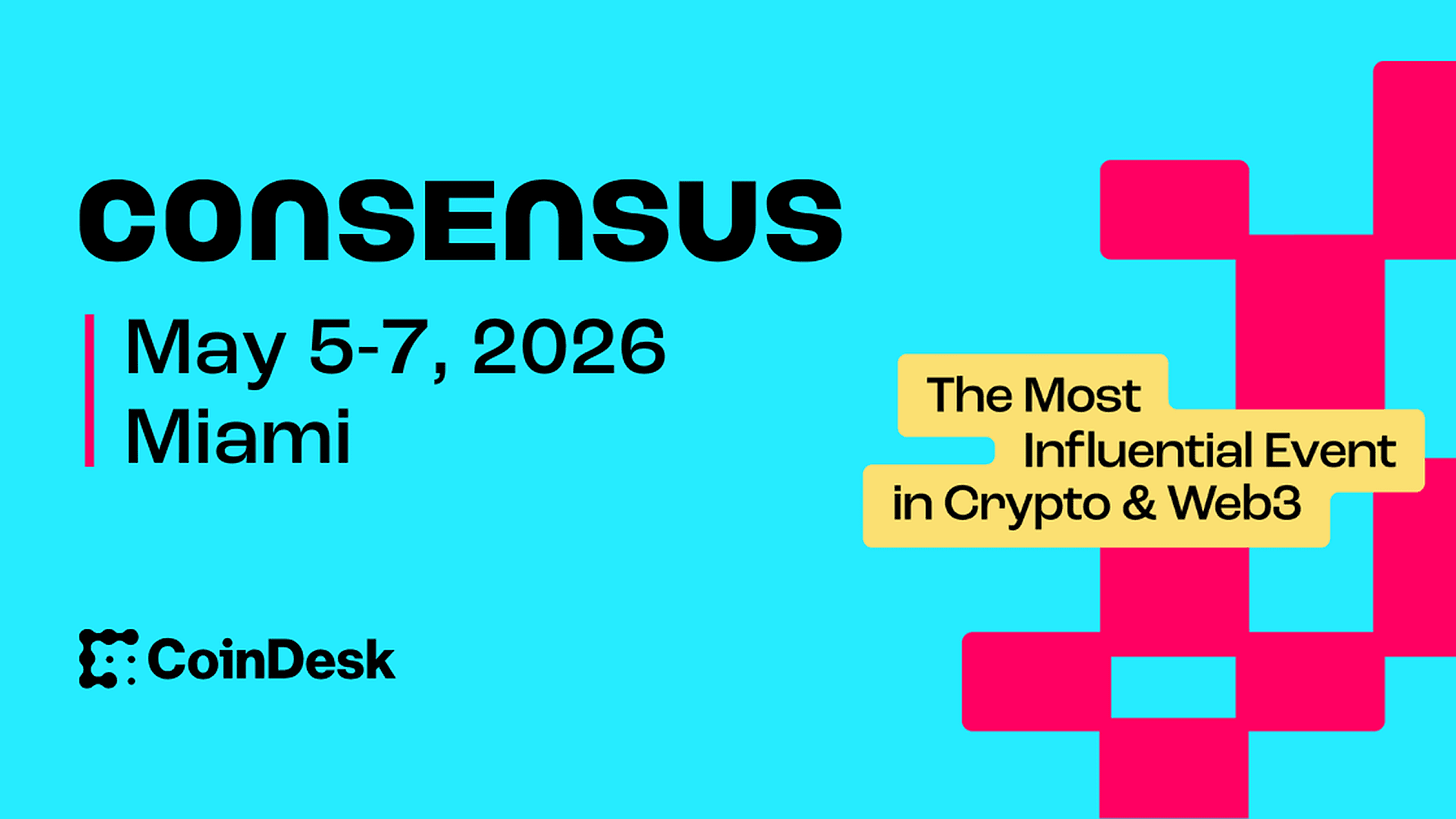
Consensus Miami (May 5-7). I’ll be at the Miami Beach Convention Center for all three days representing the great team at Crypto Insights Group. The themes worth tracking this year are stablecoin policy, tokenization of public-market assets, and the AI-and-blockchain integration thread that’s moved from theoretical to operational. If you’re going to be on the ground, reply to this email and we’ll find a coffee.
FOMC meeting (May 5-6). The Fed’s May meeting lands the same week as Consensus. Markets are pricing in no change to rates, with most of the focus on the post-meeting press conference and any signal Powell offers on the balance-sheet runoff timeline.
Q1 earnings continues. Roughly 126 S&P 500 companies (including two Dow 30 components) report this week. With 84% of prior reporters beating, the bar to keep the rally going is higher than it was three weeks ago.
The early-May $80K test for Bitcoin. April high sits at roughly $79,500. The historical pattern since 2020 says clearing the prior-month high in the first five trading days of May tends to extend, while failing it has averaged a 20% drawdown over the rest of the month. May’s overall track record is mixed (it ranks sixth by average return since 2013), but the early-May pivot is a reasonable line to watch.
🛑 REMINDER 🛑
If you’d like first access when Discord opens and the first indicators ship, this is where to raise your hand.
Interested? Fill out the 30-second interest form here. 👈
Matthew Snider is the founder of Block3 Strategy Group, author of “Warren Buffett in a Web3 World,” and publisher of the BitFinance newsletter. He holds a Series 65 and MBA, and has been an active participant in digital asset markets since 2015. This article is for educational purposes only and should not be considered financial advice. Always consult with a qualified professional before making investment decisions.